Who we help
The professional
Long days at the desk. A neck that never lets go, headaches by mid-afternoon, wired at night and foggy by two. It has been like this for years, and you have stopped calling it a problem.
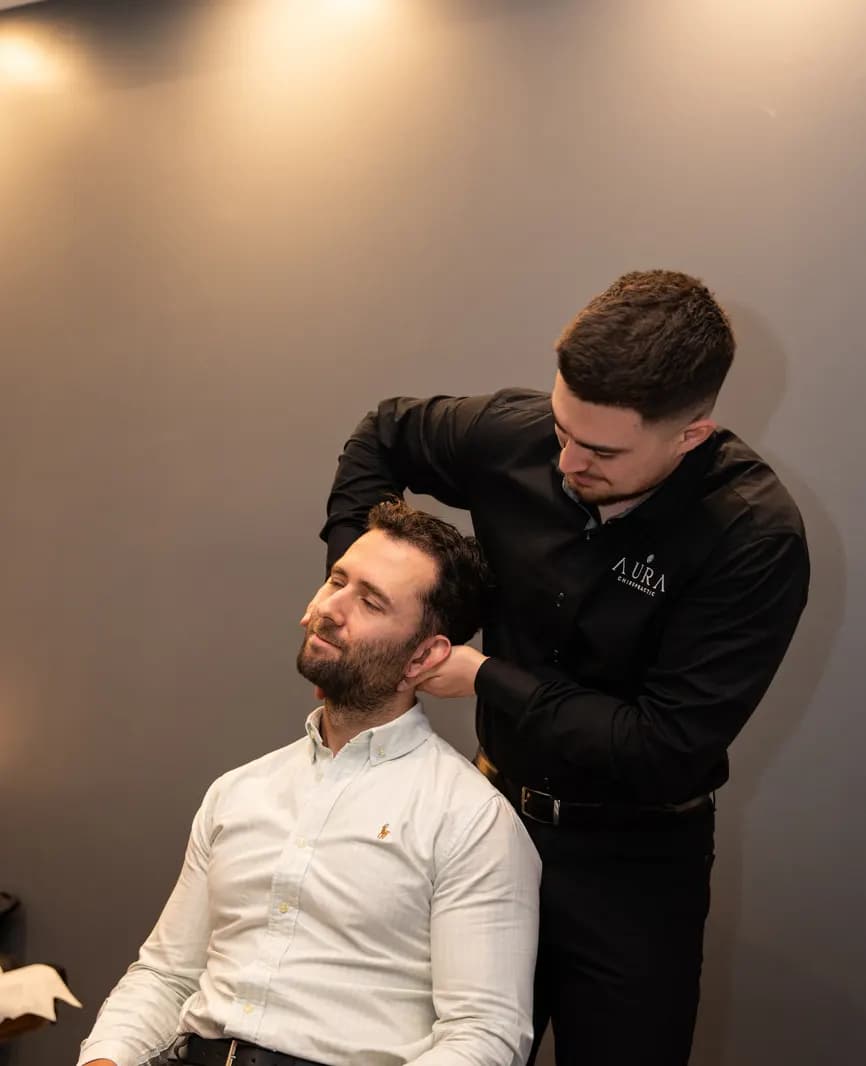
How it tends to show up
Does this sound like you?
01
A neck and upper back that are tight before you have even started the day
02
Headaches that arrive around the same time every afternoon
03
Shoulders that creep up toward your ears during a hard week
04
Wired at night, then flat and foggy by two the next afternoon
05
Sleep that comes easily enough but does not hold, or does not restore
06
A body that only really lets go on the second week of a holiday
What a desk actually does to a neck
Musculoskeletal conditions are among the most common long-term health problems in Australia, and neck and back complaints make up a large share of them.[1] Among the people we see in Toorak, the ones who work at a desk arrive with a recognisable version of it.
The load is not dramatic. It is a head held a few centimetres forward of where it sits naturally, for eight or nine hours, five days a week, for years. The muscles at the back of the neck and across the top of the shoulders are not built to hold a position that long, so they take on a job that joints and ligaments were meant to share. Over time the neck loses some of its normal movement, and the muscles that are compensating tighten further to protect what is no longer moving well.
That is why the pattern is so consistent. Worse by mid-afternoon. Worse after a heavy screen week. Noticeably better after a real break. The trigger is not one bad moment. It is accumulation.
Why the headaches arrive at the same time every day
Headache is one of the most common health complaints in the world, and most people who have one will have another.[2] The kind we see most often in professionals starts at the base of the skull and spreads forward.
The top of the neck and the base of the skull share nerve pathways with the head and face. When the joints and muscles up there are under sustained load, from hours forward over a screen or a jaw that clenches through a difficult meeting, that load can refer forward as a headache. It is why the timing is so predictable, and why people describe it as arriving rather than starting.
This is also why treating the head alone tends not to hold. If the neck and jaw are still carrying the same load on Monday, the pattern comes back with the week.
Wired at night, foggy by two
The part professionals rarely mention at the first appointment, because they do not think of it as a spine problem, is the other half: lying awake with a mind that will not slow down, then hitting a wall in the early afternoon.
Dr Arthur Kaganovitch (Chiropractor), who founded Aura in Toorak, sees this as a nervous system that has been running in a raised state for so long that raised has become its resting point. The body stays braced for a demand that never quite ends, and the physical tension in the neck and shoulders is one expression of that, not a separate problem sitting beside it.
This is clinical opinion built from years of practice, not a claim that every tight neck has a stress cause, or that care resolves it. It is one lens we apply alongside a standard physical examination, and the reason we measure rather than assume.
What the assessment measures in someone who sits for a living
Your first visit is a full assessment, not a quick look and an adjustment. We take a complete case history, examine your spine and posture, and run a neurological examination, with particular attention to the upper neck, the shoulders and the jaw.
We also measure heart rate variability and take thermographic, skin-temperature scans, so how your nervous system is regulating is something we can see rather than something we infer from how you describe your week. That gives you a baseline of your own to compare against later, rather than a comparison with someone else.
Care is a specific, considered adjustment directed at what the examination and the scans actually found, then re-measured against that baseline. If what you are describing sits outside what a chiropractic assessment should be handling on its own, Dr Arthur will say so plainly and help you get the right care.
What we do
Measure first, then care for the cause
Most care treats the symptom. We measure the nervous system driving it, explain it plainly, then care for what we found.

Stage one: Book an initial consultation
One visit, $99, ordinarily $189. A full history and examination so we understand what your body has been carrying and for how long.
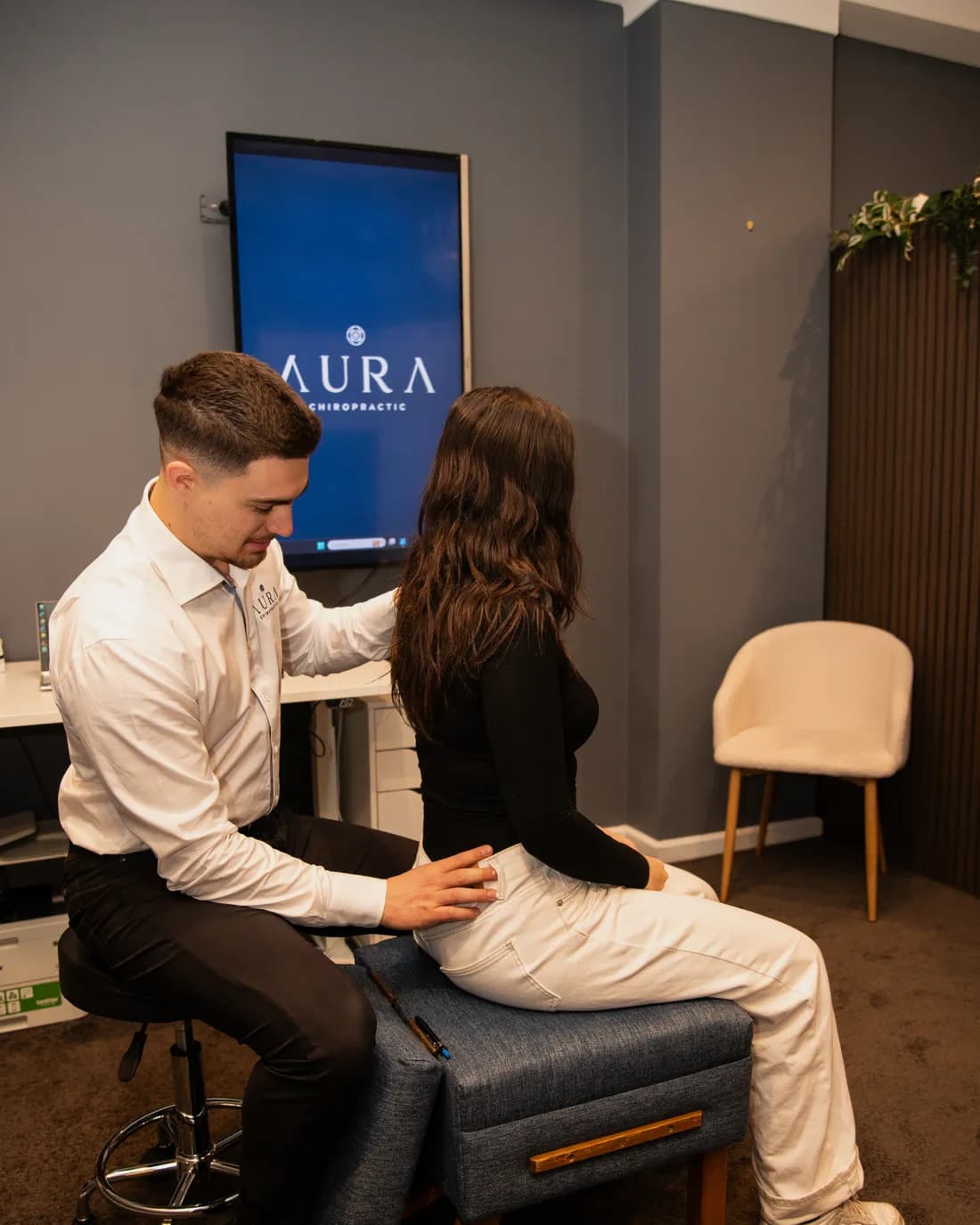
Stage two: Neurological scans and Report of Findings
Dr Arthur Kaganovitch (Chiropractor) explains all the different scans and results and comes up with a bespoke, unique plan for your needs.
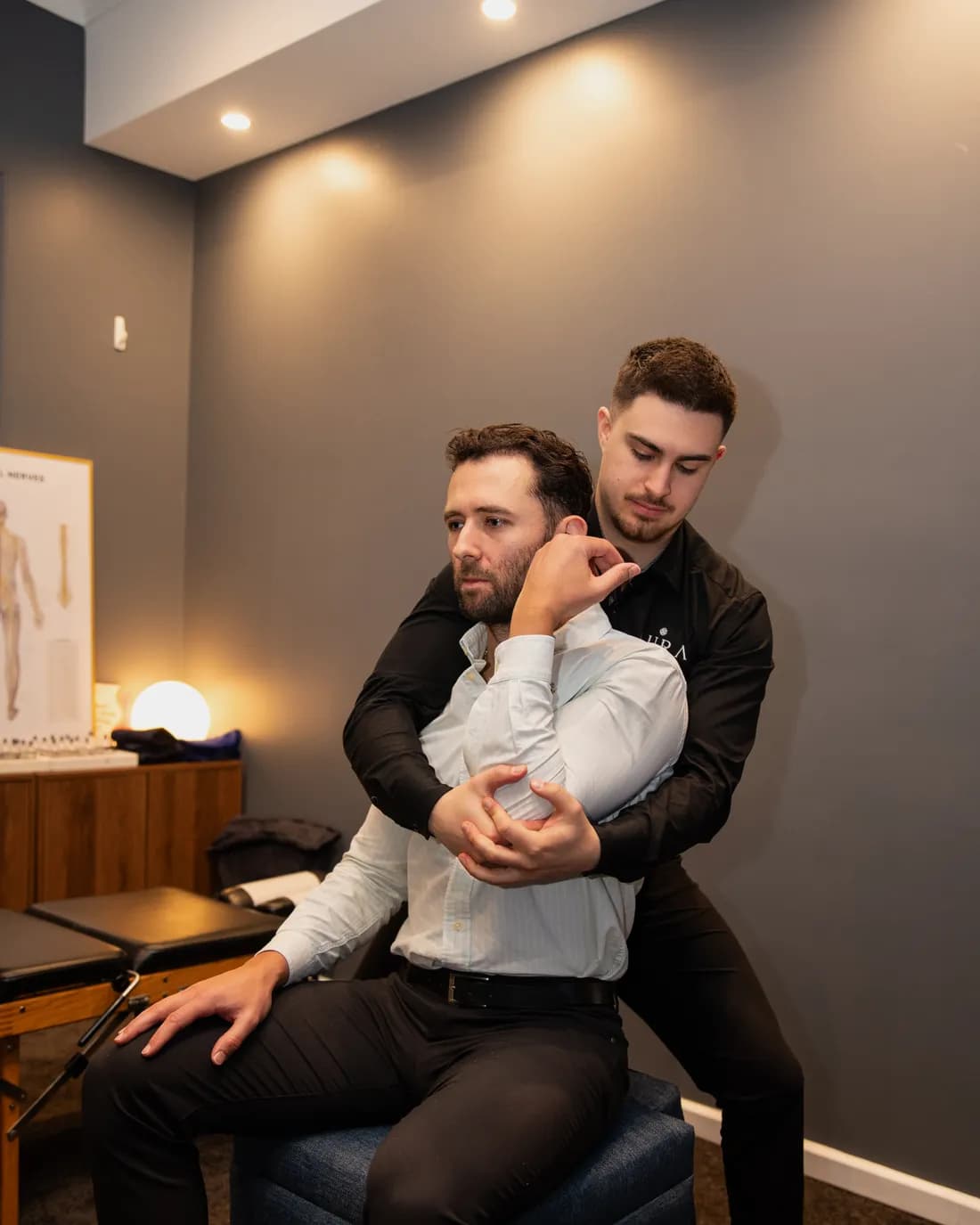
Stage three: Nervous system first chiropractic care
Specific, gentle adjustments directed at what the scans and examination found, re-measured against your own baseline so you can see what has shifted.
Your first visit
What the $99 assessment includes
$99, ordinarily $189. New patients only, one per person, no obligation to continue.
- Full case history
- Spinal examination
- Posture analysis
- Neurological examination
- Heart rate variability (HRV) measurement
- Thermographic (skin-temperature) scans
- Referral for spinal imaging (X-ray) if clinically indicated
Any imaging is charged by the imaging provider, not by Aura, and is not included in the $99.
Yes. A good deal of what we see in professionals is not pain in the way people usually mean it. It is tension that has been there so long it stopped registering, along with poor sleep and afternoon fatigue. The assessment is designed to find what is driving that, and heart rate variability and thermographic scans give us something measurable to work from rather than a guess.
We will talk about your desk, your screen height and how long you sit in one position, because those things load the neck every day. But we are realistic about what a job allows. The point of the assessment is to work out what your body is actually carrying, not to hand you a list of rules you cannot keep.
We are open Monday to Friday, 8am to 7pm, with Saturday appointments by arrangement. Early and late appointments book out first, so it is worth booking ahead if those are the only times that work for you.
No. Every assessment includes a full spinal and neurological examination, heart rate variability measurement and thermographic scans, and any adjustment is directed at the specific segments that examination identified. If the examination does not support adjusting somewhere, we do not adjust it.
The first visit is $99, ordinarily $189. It is for new patients only, one per person, as a one-off payment, with no obligation to continue. Any imaging is charged by the imaging provider and is not included in the $99.
No. Chiropractic is a primary contact profession in Australia, so you can book directly, with no referral needed.
Sources
- 1. Australian Institute of Health and Welfare. Chronic musculoskeletal conditions, 2024. View source
- 2. World Health Organization. Headache disorders, 2024. View source
Population figures and guideline positions are drawn from the cited sources. Observations attributed to Dr Arthur Kaganovitch (Chiropractor) reflect his clinical experience at Aura and are not claims of guaranteed outcomes. This page is general information, not a diagnosis or individual advice.
Related
Keep reading
Neck pain

Headaches and migraines
Posture
Desk posture: what actually matters, and what does not
From the journal
The perfect chair will not save your neck. What the research says about sitting, why variation and breaks matter more than a single correct position, and what a guarded posture is telling you.
Waking at 3am: what a stressed nervous system does to sleep
From the journal
Falling asleep is easy, staying asleep is not. Why the 3am wake is so common in people under load, the cortisol rhythm behind it, and what tends to help.
Written by Dr Arthur Kaganovitch (Chiropractor). Last reviewed 8 September 2026.

The nervous system quiz
Is your nervous system stuck in fight or flight?
Two minutes. Sixteen quick taps. Find out which of four patterns your body is running on.
Take the quiz
Your body has been stuck in protection long enough
One visit to measure it. $99, ordinarily $189, no obligation to continue.