We treat
Posture correction in Toorak
Slumped shoulders and a forward head are usually a body bracing, not a habit you have failed to break. Our work is to find what it is guarding against.
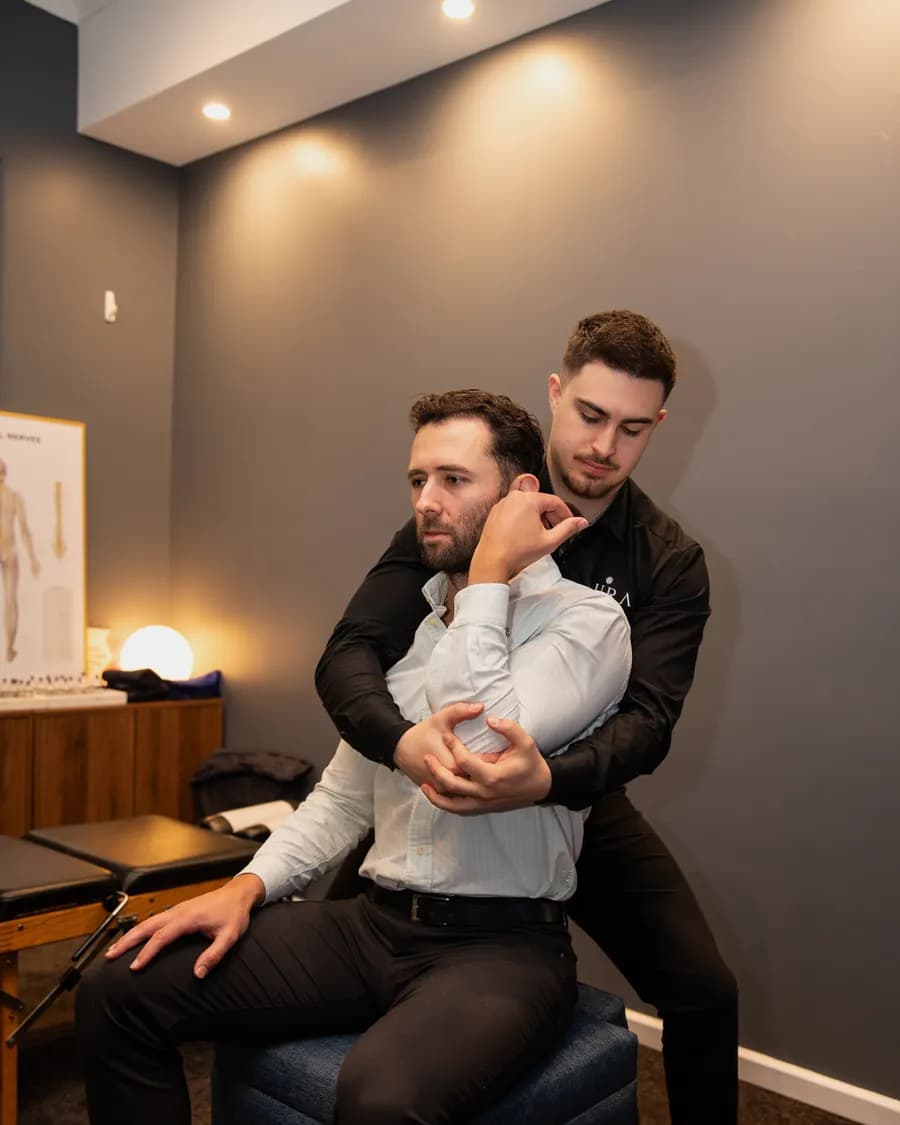
How it tends to show up
Does this sound like you?
01
Rounded shoulders and a forward head by the end of a long day at a desk or screen
02
A back or neck that aches more by the afternoon than it did in the morning
03
Catching yourself holding your breath, or breathing high in the chest, while you work
04
A child who slumps low over a device and needs constant reminding to sit up
05
A jaw that clenches or shoulders that sit up near the ears without you noticing
What posture is, and is not
Posture gets talked about as if there is one correct shape and everyone else is doing it wrong. The research does not support that. A large review of the evidence found no consistent link between spinal posture, or how much load a joint carries during the day, and low back pain, and no consensus that posture causes it at all.[1] Sitting up perfectly straight all day is not protective, and a rounded moment is not an injury.
What the evidence does point to is variation. Bodies that move through a range of positions across the day tend to fare better than bodies held in any single position, correct or not, for hours on end. The problem is rarely the shape you are in at any one moment. It is usually staying in it too long without change.
That does not mean posture is irrelevant to us. It means we look at it differently: not as a pass or fail grade, but as one visible sign of how a nervous system is carrying itself through the day. A photo of your posture in a doorway tells you a shape. It does not tell you why your body chose it, or whether it is costing you anything.
The guarding picture
Dr Arthur Kaganovitch (Chiropractor) sees the same pattern often enough to trust it: a body that has learned to brace does not relax back to neutral just because the deadline has passed. Long hours, poor sleep, stress and old injuries all ask the nervous system to protect certain areas, and the shoulders round, the head drifts forward and the breath gets shallow because that is what a guarded system does. Over time the bracing itself becomes the default position, held even when nothing in particular is threatening it right now.
Seen this way, telling someone to simply sit up straighter rarely holds, because it treats the visible shape and leaves the underlying guarding untouched. The more useful question is what the system is bracing against, and whether it still needs to. That is a clinical question, answered by examination and measurement, not by a mirror.
Posture analysis and thermography at Aura
We do not guess at this. Posture analysis is part of the $99 initial assessment, alongside a full spinal and neurological examination. It gives us an objective picture of how your frame is sitting, not a subjective glance.
Alongside it we run thermographic, skin temperature scans and measure your heart rate variability, both part of the same assessment. Thermography can show asymmetries in how the nervous system is regulating either side of the spine, which is one part of the guarding picture; it is a measure of nervous system activity, not a direct scan of posture or spinal load. Put together with the posture analysis and the examination, it gives Dr Arthur a fuller read of what your body is holding and where.
Children and devices
Parents often bring this up about their kids before they bring it up about themselves: a child slumped low over a tablet or laptop, head dropped, shoulders curled in. The same principle applies. One slumped hour is not the concern. A body that spends most of its waking hours in the same guarded shape, with little variation and little movement, is worth a look, particularly if it is paired with headaches, irritability or a reluctance to be active.
We assess children the same way we assess adults, with a full history and examination first, so any recommendation is based on what we actually found rather than on a photo of how they sat at the dinner table.
What we do
We start with the assessment: a full case history, spinal and neurological examination, posture analysis, heart rate variability and thermographic scans. That tells us whether what we are looking at is guarding, restricted movement in the spine, or simply a habit worth adjusting, rather than assuming from the outside.
From there, care is aimed at the nervous system driving the bracing, precise, considered chiropractic adjustments to restore movement, alongside the practical changes, movement breaks, set up, breathing, that help a body stop needing to guard so hard. There is no promise of a permanently corrected posture and no set timeline. The aim is a system with less to defend against.
What we do
Measure first, then care for the cause
Most care treats the symptom. We measure the nervous system driving it, explain it plainly, then care for what we found.

Stage one: Book an initial consultation
One visit, $99, ordinarily $189. A full history and examination so we understand what your body has been carrying and for how long.
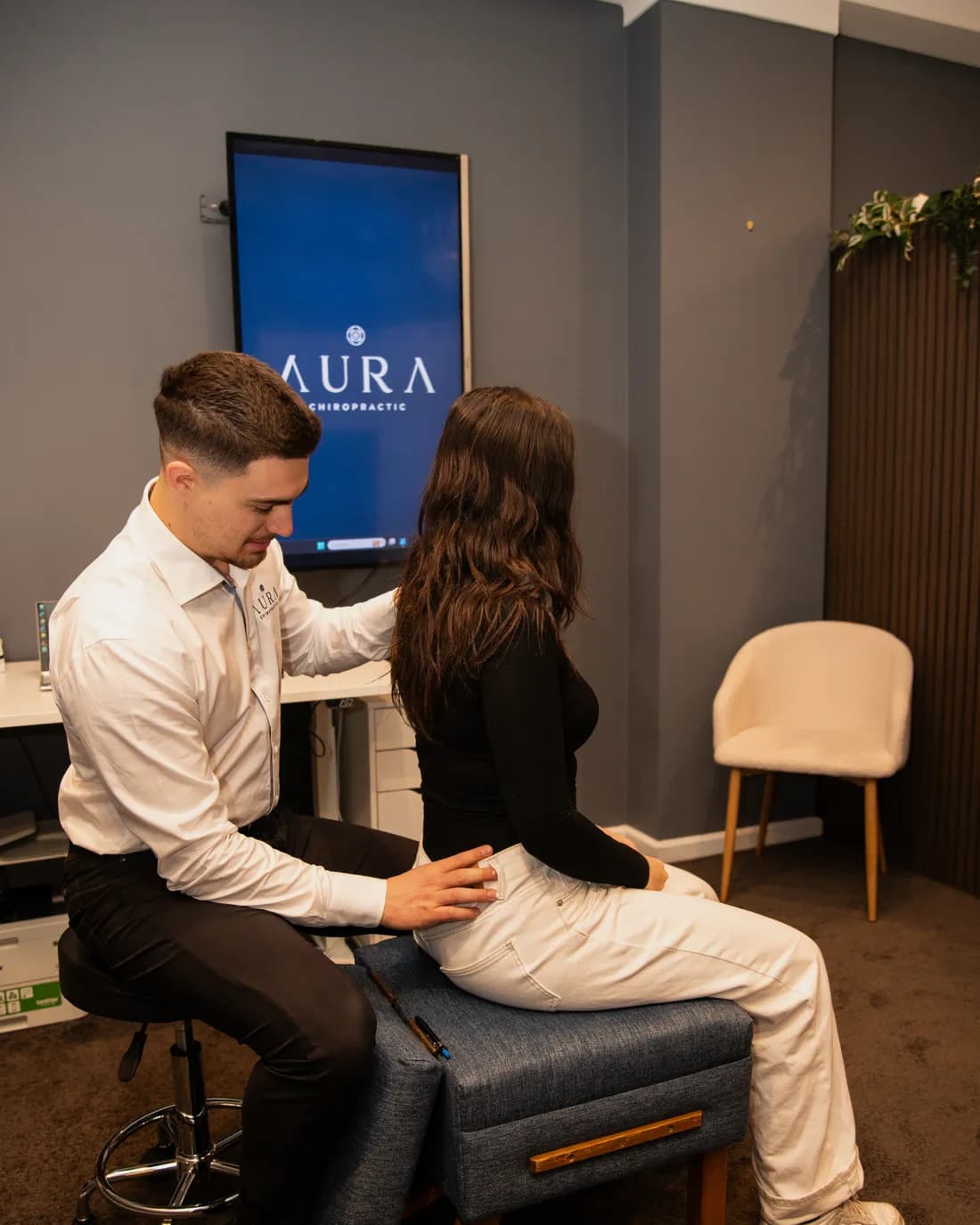
Stage two: Neurological scans and Report of Findings
Dr Arthur Kaganovitch (Chiropractor) explains all the different scans and results and comes up with a bespoke, unique plan for your needs.
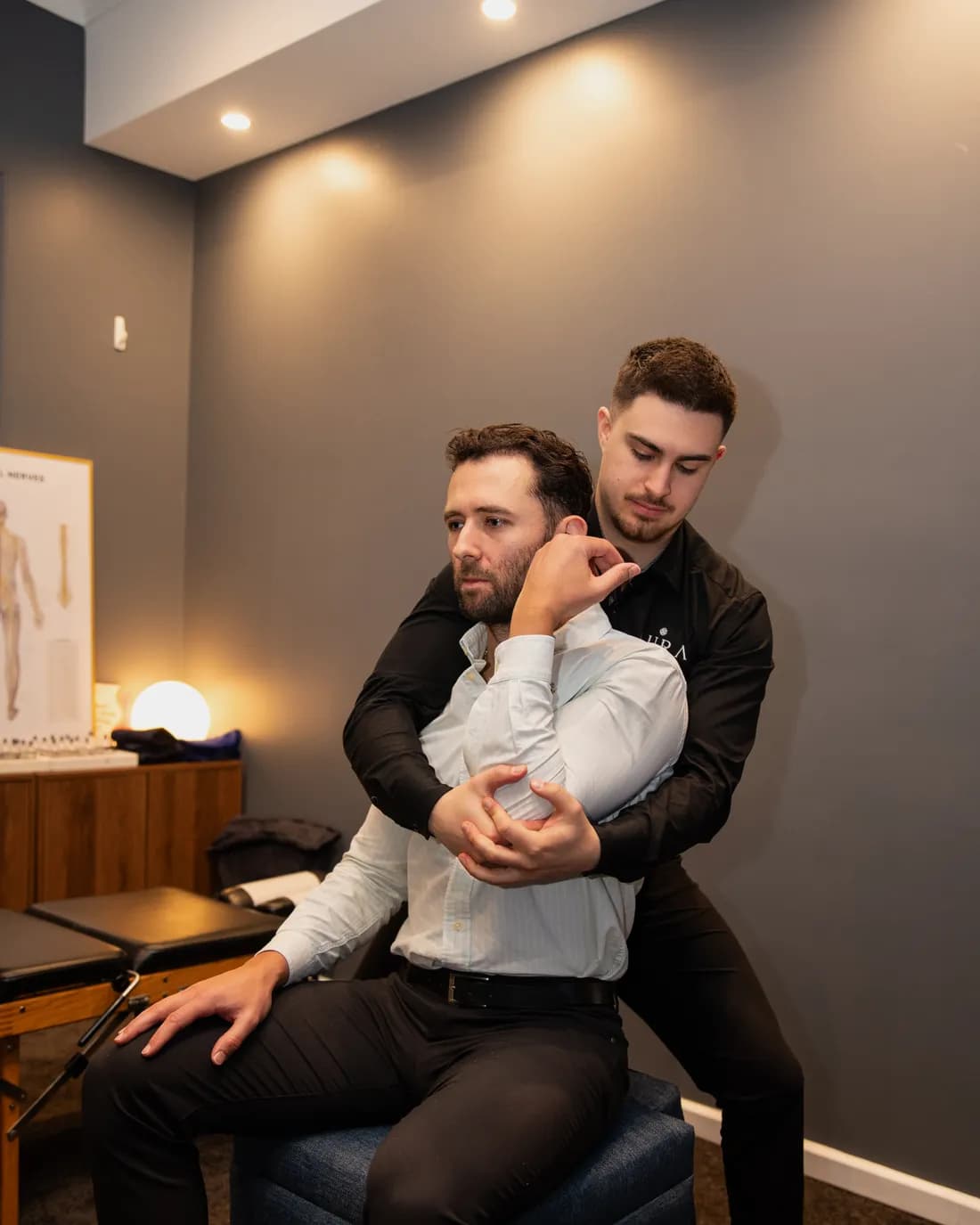
Stage three: Nervous system first chiropractic care
Specific, gentle adjustments directed at what the scans and examination found, re-measured against your own baseline so you can see what has shifted.
Your first visit
What the $99 assessment includes
$99, ordinarily $189. New patients only, one per person, no obligation to continue.
- Full case history
- Spinal examination
- Posture analysis
- Neurological examination
- Heart rate variability (HRV) measurement
- Thermographic (skin-temperature) scans
- Referral for spinal imaging (X-ray) if clinically indicated
Any imaging is charged by the imaging provider, not by Aura, and is not included in the $99.
There is no single correct posture to fix into, and we will not promise one. What tends to help is addressing why a body is bracing in the first place, restoring movement where the spine has lost it, and building in more variation through the day. We assess first so any plan is based on what your body is actually doing, not a general rule.
A brace can remind you of a position, but it does not address why your body is bracing, and wearing one for long periods can make the surrounding muscles more dependent, not less. We would rather find and settle the underlying guarding than have you rely on a device to hold a shape for you.
Not directly. Thermography is a skin temperature scan that gives us a picture of nervous system activity, including asymmetries either side of the spine, which is one part of the guarding picture. It is read alongside the posture analysis and the physical examination, not as a stand alone measure of how much load your spine is carrying.
We assess children the same way we assess adults: a full case history and examination first, including posture analysis, so any recommendation is based on what we find rather than a guess from across the room. If you are concerned about how your child sits or holds themselves, that assessment is the place to start.
The first visit is $99, ordinarily $189. It is for new patients only, one per person, as a one-off payment, with no obligation to continue. Any imaging is charged by the imaging provider and is not included in the $99.
No. Chiropractic is a primary contact profession in Australia, so you can book directly, with no referral needed.
Sources
- 1. Journal of Biomechanics. No consensus on causality of spine postures or physical exposure and low back pain: A systematic review of systematic reviews, 2020. View source
Population figures and guideline positions are drawn from the cited sources. Observations attributed to Dr Arthur Kaganovitch (Chiropractor) reflect his clinical experience at Aura and are not claims of guaranteed outcomes. This page is general information, not a diagnosis or individual advice.
Related
Keep reading
Children and infants
Neck pain
Headaches and migraines
Lower back pain
Desk posture: what actually matters, and what does not
From the journal
The perfect chair will not save your neck. What the research says about sitting, why variation and breaks matter more than a single correct position, and what a guarded posture is telling you.
The physiological sigh: one breath pattern the evidence supports
From the journal
Two short breaths in through the nose, one long breath out. What the physiological sigh does to the nervous system, what the research actually found, and how to use it without overselling it.
Written by Dr Arthur Kaganovitch (Chiropractor). Last reviewed 8 September 2026.

Your body has been stuck in protection long enough
One visit to measure it. $99, ordinarily $189, no obligation to continue.