Who we help
Parents
Two young kids and not enough sleep. Jaw clenched, tingling fingers, a lower back that goes every few months and a memory that is not what it was. Running on empty and calling it normal.
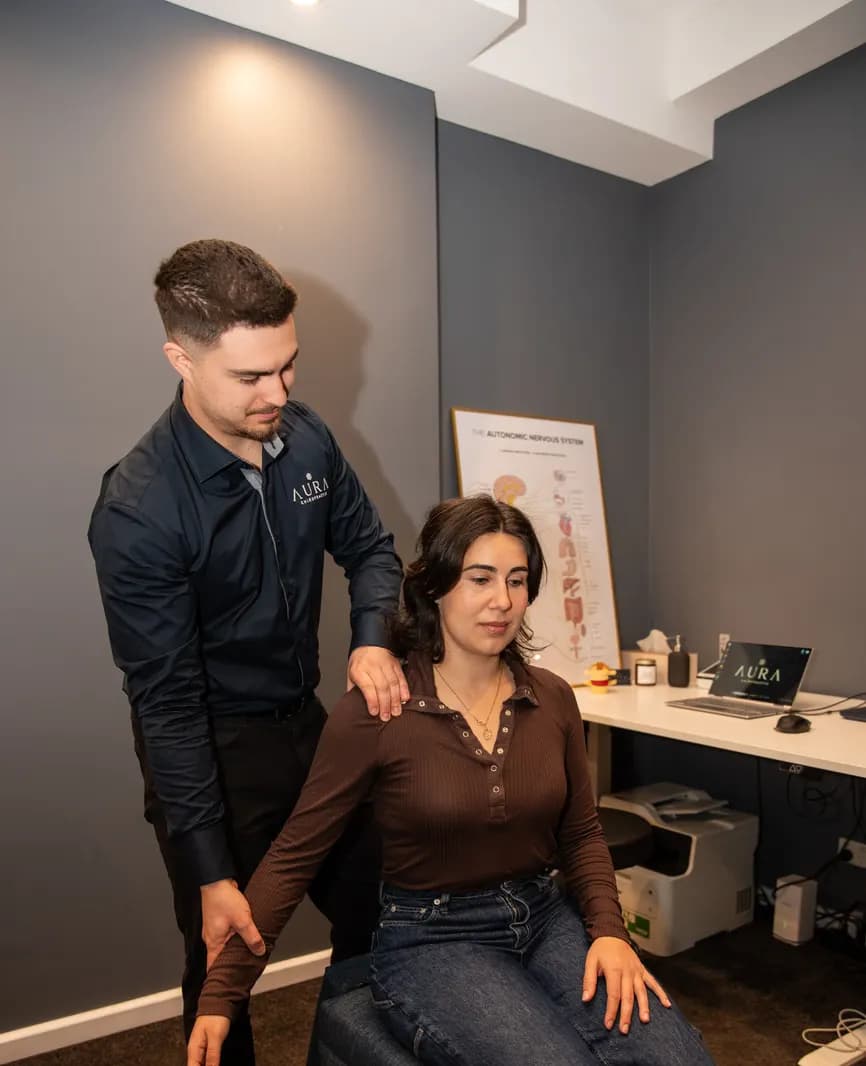
How it tends to show up
Does this sound like you?
01
A lower back that goes every few months, usually while doing something ordinary
02
A jaw you find clenched when you finally notice it, often at night
03
Tingling or numbness in the fingers, worse in the morning
04
One shoulder and one hip that have quietly become the load-bearing side
05
Sleep broken so often that you no longer expect a full night
06
A memory and a patience that are both shorter than they used to be
What a parent's spine actually does all day
Back problems affect a very large number of Australians, and the lower back is the most commonly reported site.[1] The version we see in parents of young children has its own shape.
It is asymmetric and it is constant. A child is carried on one hip, fed on one side, lifted from a cot at an angle no one would choose, and buckled into a car seat by leaning across it. Add a pram, a nappy bag and a night spent half upright, and one side of the body ends up doing considerably more work than the other, every day, for years.
That is why the back that goes tends to go while doing nothing much. Picking up a sock. Turning to reach the back seat. The moment gets the blame, but the moment is rarely the cause. It is the last small thing on top of a great many small things.
Jaw clenching and tingling fingers travel together
Two complaints come up so often in this group that we now ask about them directly, because parents almost never volunteer them.
The first is jaw clenching, usually discovered rather than noticed, either on waking with a sore jaw or by catching yourself mid-clench during a difficult hour. The jaw sits right beside the upper neck and loads the same muscles and joints, which is why jaw tension and neck tension so often arrive as a pair.
The second is tingling or numbness in the fingers, typically worse first thing. There are several possible reasons for that, some of which sit in the neck and shoulder and some of which do not. Working out which applies to you is exactly what an examination is for, and it is not something to self-diagnose or leave indefinitely.
Running on empty and calling it normal
The thing most parents say some version of, once they relax a little in the room, is that they assumed all of this was simply the cost of having young children.
Dr Arthur Kaganovitch (Chiropractor) sees it differently. Broken sleep, a body braced against the next demand and no real gap between demands is a nervous system held in a raised state for years, and the clenched jaw, the tight back and the short fuse are the same picture rather than a list of separate complaints. Tired is expected. Stuck is not the same thing as tired.
That is clinical opinion drawn from practice, not a claim that care fixes exhaustion or replaces sleep. It is the reason we measure how your nervous system is regulating instead of taking a description of a hard year at face value.
What the assessment looks like when you have no time
Your first visit is a full assessment: a complete case history, a spinal examination, posture analysis and a neurological examination, plus heart rate variability measurement and thermographic scans. It is one visit, $99, ordinarily $189.
You get a baseline of your own out of it, which matters most for people who have been unwell slowly. When you have been running down for three years, you have no idea what your own normal looks like any more, and a measurement gives you something to compare against that is not a memory.
Care is a specific adjustment directed at what the examination found, re-measured against that baseline over time. If something we find needs a doctor or another practitioner instead of us, Dr Arthur will tell you that directly.
What we do
Measure first, then care for the cause
Most care treats the symptom. We measure the nervous system driving it, explain it plainly, then care for what we found.

Stage one: Book an initial consultation
One visit, $99, ordinarily $189. A full history and examination so we understand what your body has been carrying and for how long.
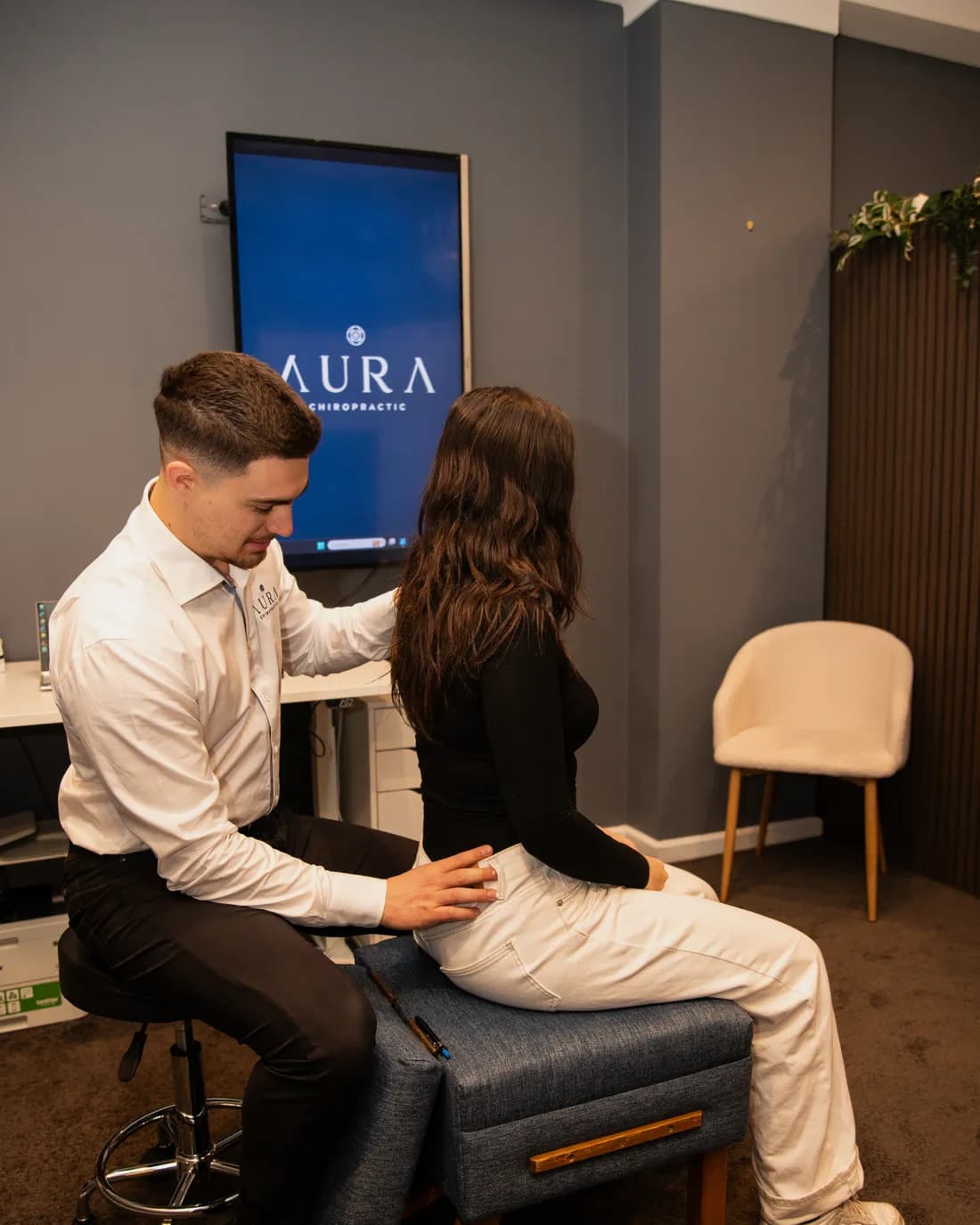
Stage two: Neurological scans and Report of Findings
Dr Arthur Kaganovitch (Chiropractor) explains all the different scans and results and comes up with a bespoke, unique plan for your needs.
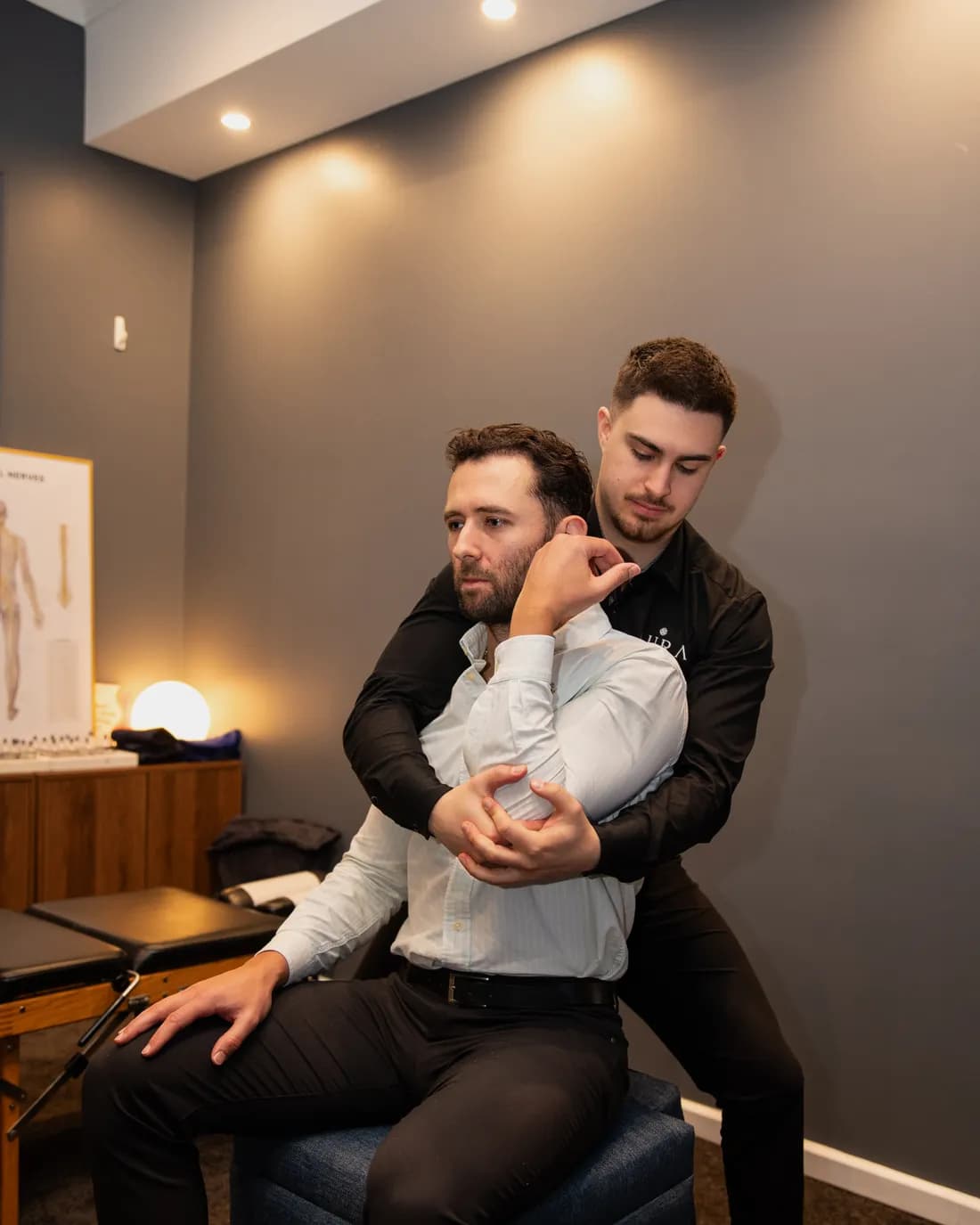
Stage three: Nervous system first chiropractic care
Specific, gentle adjustments directed at what the scans and examination found, re-measured against your own baseline so you can see what has shifted.
Your first visit
What the $99 assessment includes
$99, ordinarily $189. New patients only, one per person, no obligation to continue.
- Full case history
- Spinal examination
- Posture analysis
- Neurological examination
- Heart rate variability (HRV) measurement
- Thermographic (skin-temperature) scans
- Referral for spinal imaging (X-ray) if clinically indicated
Any imaging is charged by the imaging provider, not by Aura, and is not included in the $99.
Yes. Plenty of parents do, and we would rather you came with children in tow than did not come at all. Let us know when you book so we can allow for it.
Tell us at the appointment, because it changes both what we examine and how we approach care. The case history covers pregnancy, delivery and how long ago it was, and the examination is adapted accordingly.
A back that goes every few months and settles on its own is telling you something about how it is being loaded in between. Assessing it while it is calm is generally easier than assessing it in the middle of an episode, and it means what we find is the pattern rather than the flare.
It needs examining rather than guessing. Tingling in the hands can come from the neck, from the shoulder, from the wrist or from causes that are not musculoskeletal at all. The neurological examination at your first visit is there to work out which. If it points somewhere outside what we handle, we will say so and help you get to the right person.
The first visit is $99, ordinarily $189. It is for new patients only, one per person, as a one-off payment, with no obligation to continue. Any imaging is charged by the imaging provider and is not included in the $99.
No. Chiropractic is a primary contact profession in Australia, so you can book directly, with no referral needed.
Sources
- 1. Australian Institute of Health and Welfare. Back problems, 2024. View source
Population figures and guideline positions are drawn from the cited sources. Observations attributed to Dr Arthur Kaganovitch (Chiropractor) reflect his clinical experience at Aura and are not claims of guaranteed outcomes. This page is general information, not a diagnosis or individual advice.
Related
Keep reading
Lower back pain
Neck pain
Shoulder pain
Cortisol and allostatic load: the wear of being switched on
From the journal
Cortisol is not the villain. The problem is a stress response that never fully stands down. What allostatic load means in plain words, how it builds, and how it shows up in the body.
Waking at 3am: what a stressed nervous system does to sleep
From the journal
Falling asleep is easy, staying asleep is not. Why the 3am wake is so common in people under load, the cortisol rhythm behind it, and what tends to help.
Written by Dr Arthur Kaganovitch (Chiropractor). Last reviewed 8 September 2026.

The nervous system quiz
Is your nervous system stuck in fight or flight?
Two minutes. Sixteen quick taps. Find out which of four patterns your body is running on.
Take the quiz
Your body has been stuck in protection long enough
One visit to measure it. $99, ordinarily $189, no obligation to continue.