We treat
Neck pain chiropractor in Toorak
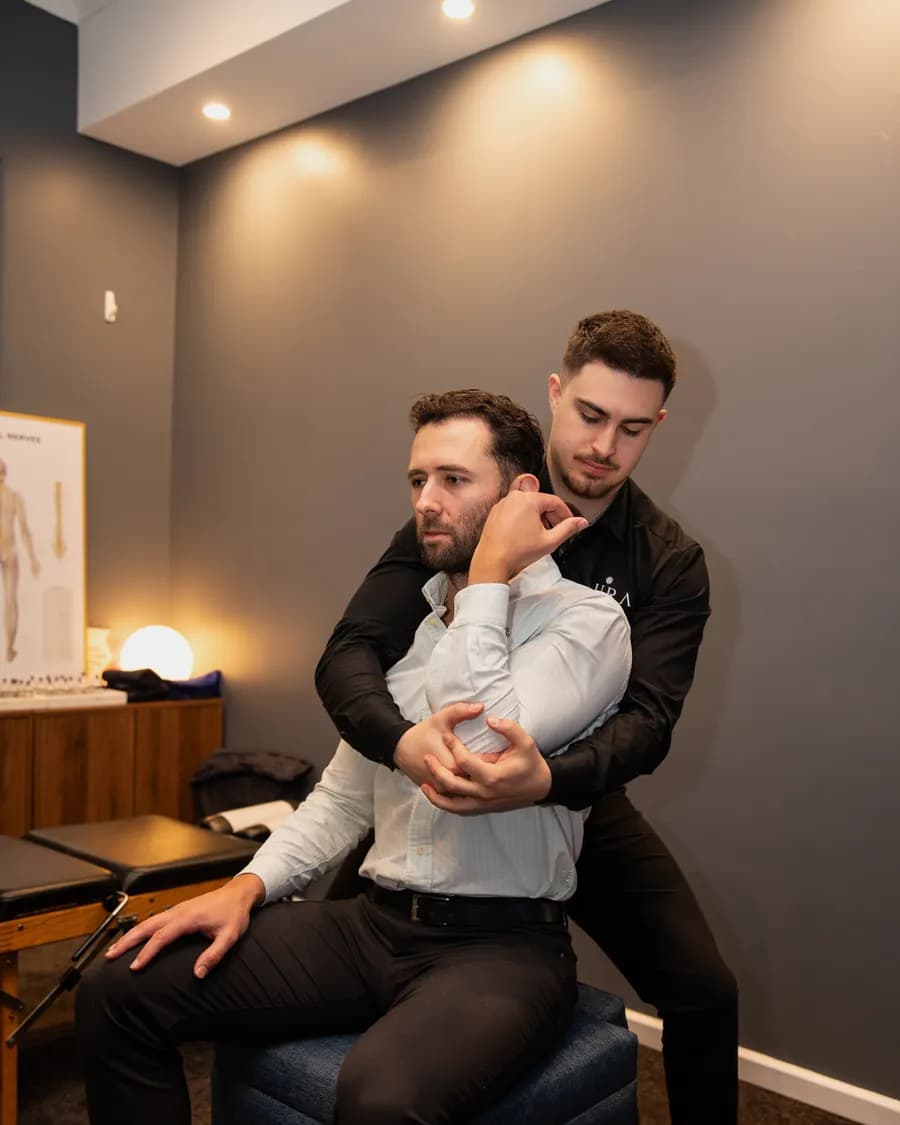
A stiff, aching or locked-up neck is rarely about a weak neck. It is usually a nervous system holding that area in guard. Our work is to find why, and help it stand down.
How it tends to show up
Does this sound like you?
01
A stiff neck that is worse first thing in the morning or by the end of a screen-heavy day
02
A dull ache across the base of the skull, or between the shoulder blades
03
Reduced ability to turn your head fully when reversing the car or checking a blind spot
04
Tension that seems to build through the day and does not fully ease overnight
05
A neck that catches or locks with certain movements, or after a long stretch at a desk
06
Tightness that travels into the jaw, shoulder or upper arm
A common problem, not usually a sinister one
Neck pain is one of the most common musculoskeletal complaints Australians live with, and it sits among the leading causes of disease burden nationally.[1] If yours has been going on for a while, you are far from alone in it.
Globally, neck pain affects hundreds of millions of people at any given time, and its burden has continued to climb over the past three decades as more of daily life is spent at a screen.[2] The reassuring part is that the overwhelming majority of neck pain is mechanical: it comes from the joints, discs and muscles of the neck losing their normal movement under sustained load, not from anything sinister happening underneath.
That does not make it trivial. A neck that will not settle changes how you sleep, how you concentrate and how you move through your day. Finding what is actually driving yours is the point of a proper assessment, rather than guessing at a pillow or a posture habit.
Why it persists
Most necks we see have not been injured in any dramatic way. What has happened instead is a slow build: hours a day with the head held forward over a keyboard or a phone, a neck that never gets to fully unload, and a body that has learned to guard that area rather than release it.
Guarding is a protective habit. Once a segment of the neck has been under strain for long enough, the surrounding muscles tighten around it to limit movement and stop it hurting more. That is a sensible short-term response. Left unaddressed, it becomes the new normal, and the stiffness stops depending on how you slept or sat that day and starts being simply there.
Static load is a big part of this. A neck built to move rarely, resting in the same forward-tilted posture for hours, does not get the small, regular movement that keeps its joints and discs nourished and mobile. It is often not the intensity of a day that causes the flare, but the stillness.
Stress adds to the load. A nervous system that is already running hot from work, poor sleep or general overwhelm tends to hold more tension through the neck and jaw, which is one reason a stiff neck and a stressful week so often arrive together.
The nervous system picture
Dr Arthur Kaganovitch (Chiropractor), who founded Aura in Toorak, sees a stiff, guarded neck as exactly that: a segment the nervous system has decided needs protecting, not a weak or damaged one. The muscles around it stay braced because the body has not been given a reason to stand down.
That is why we do not start with the sore spot alone. We measure heart rate variability and take thermographic, skin-temperature scans, so we can see how your nervous system is regulating and where it is holding tension around the neck, not just where you feel it.
After care, we re-measure against your own baseline, so what has shifted is something you can see, not just something you are told.
When neck pain needs urgent care
Most neck pain is mechanical and safe to have assessed in a clinic setting. Some presentations need medical attention first, not a chiropractic appointment.
- Neck pain following a significant trauma, such as a car accident, a fall from height or a heavy blow to the head
- Neck pain with fever, unexplained weight loss, or a history of cancer
- Numbness, weakness or pins and needles spreading into both arms or both legs
- Loss of bladder or bowel control
- Severe headache with neck stiffness, confusion or sensitivity to light
- Neck pain with dizziness, slurred speech, double vision or difficulty swallowing
What we do
Your assessment starts with a full case history and a Gonstead spinal and neurological examination, so we can see exactly which segments of your neck have lost normal movement and how the rest of your spine is compensating around them.
From there, care is specific: a precise, considered adjustment directed at what the examination found, not a generic neck crack. We re-measure your nervous system markers over time against your own baseline, so you and Dr Arthur can both see what is changing.
Alongside care, we talk through the practical side of a desk-bound day: how a workstation is set up, where the phone sits, and what small, regular movement can look like through a working day. None of that replaces the assessment. It sits alongside it.
What we do
Measure first, then care for the cause
Most care treats the symptom. We measure the nervous system driving it, explain it plainly, then care for what we found.

Stage one: Book an initial consultation
One visit, $99, ordinarily $189. A full history and examination so we understand what your body has been carrying and for how long.
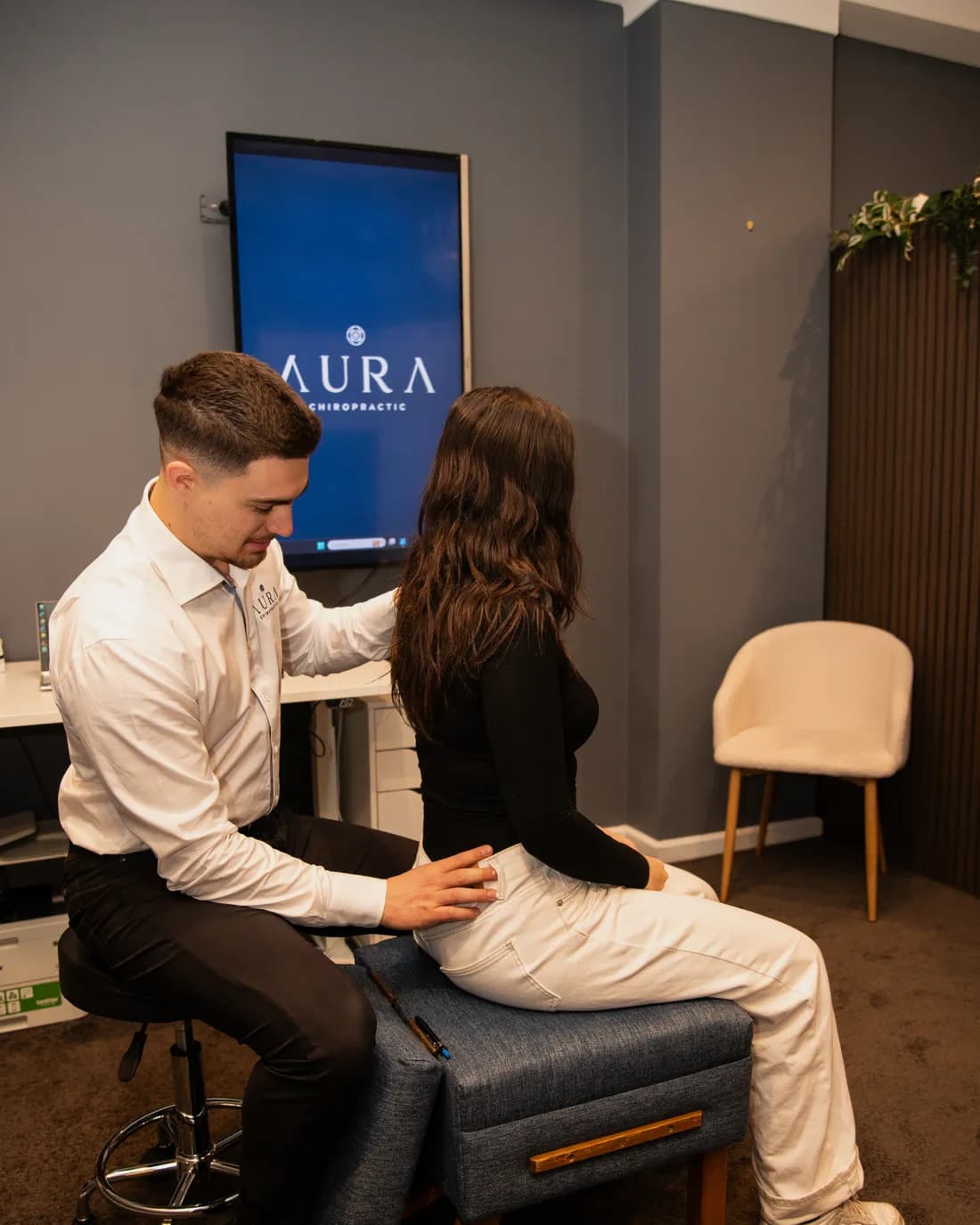
Stage two: Neurological scans and Report of Findings
Dr Arthur Kaganovitch (Chiropractor) explains all the different scans and results and comes up with a bespoke, unique plan for your needs.
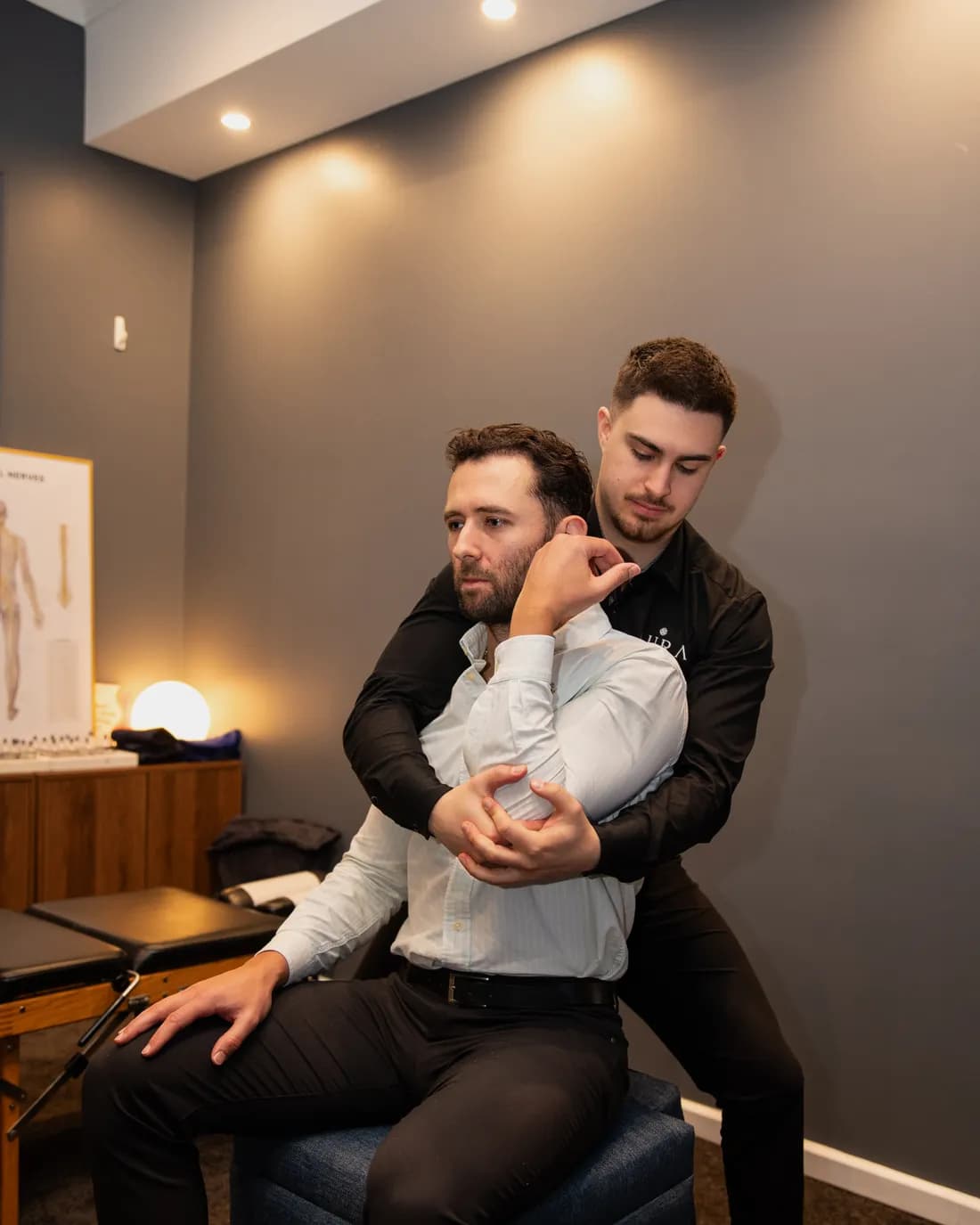
Stage three: Nervous system first chiropractic care
Specific, gentle adjustments directed at what the scans and examination found, re-measured against your own baseline so you can see what has shifted.
Your first visit
What the $99 assessment includes
$99, ordinarily $189. New patients only, one per person, no obligation to continue.
- Full case history
- Spinal examination
- Posture analysis
- Neurological examination
- Heart rate variability (HRV) measurement
- Thermographic (skin-temperature) scans
- Referral for spinal imaging (X-ray) if clinically indicated
Any imaging is charged by the imaging provider, not by Aura, and is not included in the $99.
A pillow can make an already-irritated neck feel worse overnight, but it is rarely the underlying cause on its own. Most neck stiffness comes from sustained load and guarding built up through the day, not the eight hours in bed. We look at the neck itself, not just what you are sleeping on.
Chiropractic care is a common, conservative approach for mechanical neck pain. At Aura we assess which segments have lost movement, then use a precise, considered adjustment aimed at restoring it. We cannot promise a particular outcome or timeline. The first step is always an assessment, so we can be sure care is right for you.
Neck pain after a significant trauma, with fever or unexplained weight loss, with numbness or weakness spreading into both arms or legs, with loss of bladder or bowel control, or alongside dizziness, slurred speech or difficulty swallowing needs urgent medical care, not a chiropractic appointment. If any of that applies to you, please seek medical attention first.
Yes. A neck that is held forward over a screen for hours a day is one of the most common patterns we see, in professionals in their thirties, forties and fifties. We assess how your neck has adapted to that load and go from there.
The first visit is $99, ordinarily $189. It is for new patients only, one per person, as a one-off payment, with no obligation to continue. Any imaging is charged by the imaging provider and is not included in the $99.
No. Chiropractic is a primary contact profession in Australia, so you can book directly, with no referral needed.
Sources
- 1. Australian Institute of Health and Welfare (AIHW). Musculoskeletal conditions, 2024. View source
- 2. GBD 2021 Neck Pain Collaborators, The Lancet Rheumatology. Global, regional, and national burden of neck pain, 1990-2020, 2024. View source
- 3. National Institute for Health and Care Excellence (NICE). Neck pain (non-specific): assessment and early management, 2016. View source
Population figures and guideline positions are drawn from the cited sources. Observations attributed to Dr Arthur Kaganovitch (Chiropractor) reflect his clinical experience at Aura and are not claims of guaranteed outcomes. This page is general information, not a diagnosis or individual advice.
Related
Keep reading
The professional

Headaches and migraines
Posture
Shoulder pain
Desk posture: what actually matters, and what does not
From the journal
The perfect chair will not save your neck. What the research says about sitting, why variation and breaks matter more than a single correct position, and what a guarded posture is telling you.
Written by Dr Arthur Kaganovitch (Chiropractor). Last reviewed 8 September 2026.

Your body has been stuck in protection long enough
One visit to measure it. $99, ordinarily $189, no obligation to continue.