We treat
Shoulder pain chiropractor in Melbourne
Shoulder pain does not always start in the shoulder. Our work is to find out whether yours is coming from the joint itself or from the neck above it, then settle the cause.
How it tends to show up
Does this sound like you?
01
An ache across the top of the shoulder or shoulder blade that seems to travel from the neck
02
Pain or catching when you lift the arm overhead or reach behind your back
03
Stiffness that is worse first thing in the morning or after sitting at a desk
04
A shoulder that feels tight or restricted on one side more than the other
05
Pain that changes when you turn or tilt your neck, not just when you move your arm
Where shoulder pain comes from
The shoulder is the end of a chain that starts at the neck. Pain felt at the shoulder can come from the joint itself, the rotator cuff tendons, the capsule, the bursa, or it can be referred from irritation in the cervical spine and travel down into the shoulder and upper arm. The two can also sit together, a stiff neck adding strain to a shoulder already working hard.
Shoulder pain is common. Population studies put the point prevalence at around one in five adults, with roughly seven in ten reporting an episode at some point in their life.[1] Musculoskeletal conditions of this kind are among the most common reasons Australians seek care from a health practitioner.[2] Most of that burden sits in the joint, the tendons or the surrounding soft tissue, but a meaningful share is neck related, which is exactly the distinction worth making before deciding what to do about it.
How to tell
A few patterns point toward the neck as the source: pain that shifts when you turn or tilt your head rather than when you move your arm, an ache that sits more across the shoulder blade and base of the neck than deep in the joint, or pins and needles running down the arm. Pain that is worse specifically on overhead reaching, behind the back movements, or lying on that side at night tends to point more toward the shoulder joint or rotator cuff itself.
The two patterns can overlap, which is why we do not guess from a description over the phone. A proper examination looks at how the neck moves, how the shoulder moves, and which one reproduces your pain. Range of movement, the exact point pain begins, and whether pressing on the neck or the shoulder itself brings on your symptoms all add to the picture.
The nervous system picture
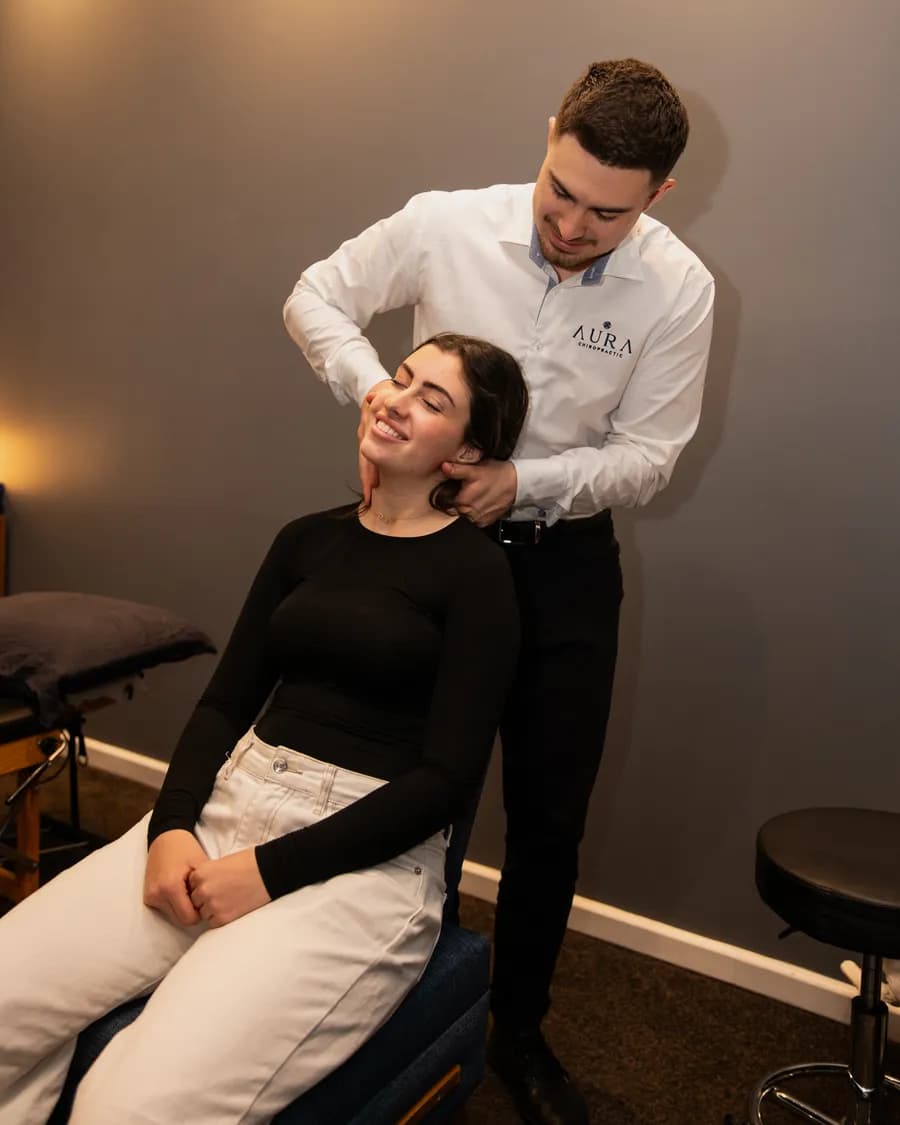
Dr Arthur Kaganovitch (Chiropractor) treats the cervical spine as part of the shoulder story, not a separate issue. The nerves that supply the shoulder and arm exit the neck, and a neck that has lost normal movement or sits under strain can refer pain, tightness or altered sensation well beyond where the irritation actually is. A shoulder held guarded against that irritation over time tends to lose its own range of movement as a secondary effect.
Where the neck is contributing, our care is aimed at restoring movement and settling that irritation, precise, considered chiropractic adjustments to the cervical and upper thoracic spine, alongside the heart rate variability and thermographic scans that show how the surrounding nervous system is holding tension. Settling that irritation is often what allows the shoulder itself to move more freely again, rather than working on the shoulder in isolation.
When to seek medical care
Some shoulder presentations need medical assessment rather than chiropractic care. Seek medical care promptly for shoulder pain following significant trauma, a visible deformity of the shoulder, a complete inability to lift or move the arm, or night pain combined with unexplained weight loss or feeling generally unwell. These are outside what a chiropractic assessment is designed to manage, and we will refer you on if we see them.
What we do
Your assessment starts with a full case history and examination that specifically separates neck from shoulder: how each moves, what reproduces your pain, and what the nervous system scans show. Gonstead analysis of the cervical and upper thoracic spine lets us find precisely where movement is restricted, rather than treating the shoulder in isolation because that is where the pain is felt.
We are honest about scope. Where the shoulder joint itself is the primary problem, a rotator cuff tear or a frozen shoulder for example, that often needs care beyond what a chiropractic adjustment addresses, and we will tell you plainly and point you toward the right care. Where the neck is driving what you feel in the shoulder, that is exactly the kind of case we are built to work with.
What we do
Measure first, then care for the cause
Most care treats the symptom. We measure the nervous system driving it, explain it plainly, then care for what we found.

Stage one: Book an initial consultation
One visit, $99, ordinarily $189. A full history and examination so we understand what your body has been carrying and for how long.
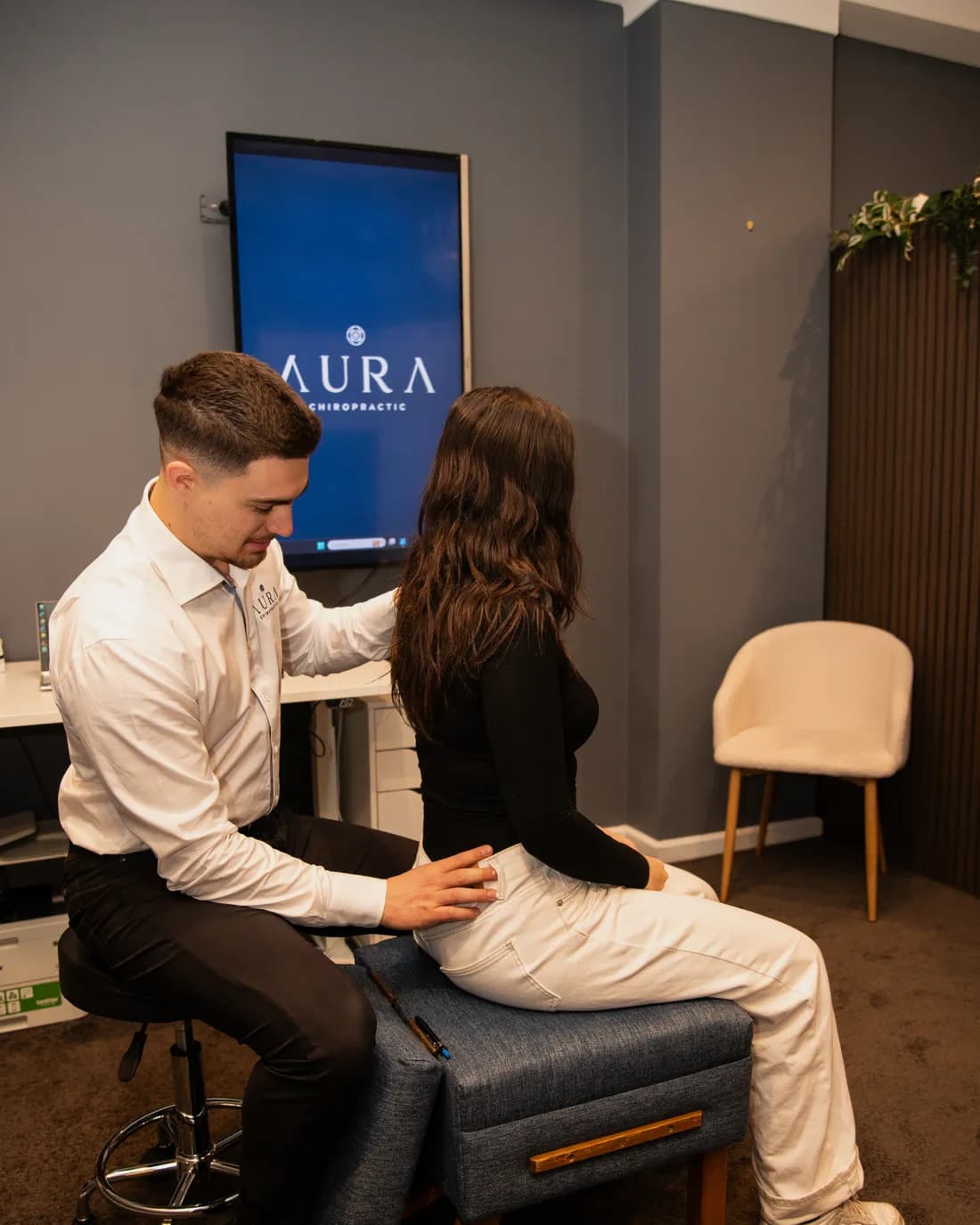
Stage two: Neurological scans and Report of Findings
Dr Arthur Kaganovitch (Chiropractor) explains all the different scans and results and comes up with a bespoke, unique plan for your needs.
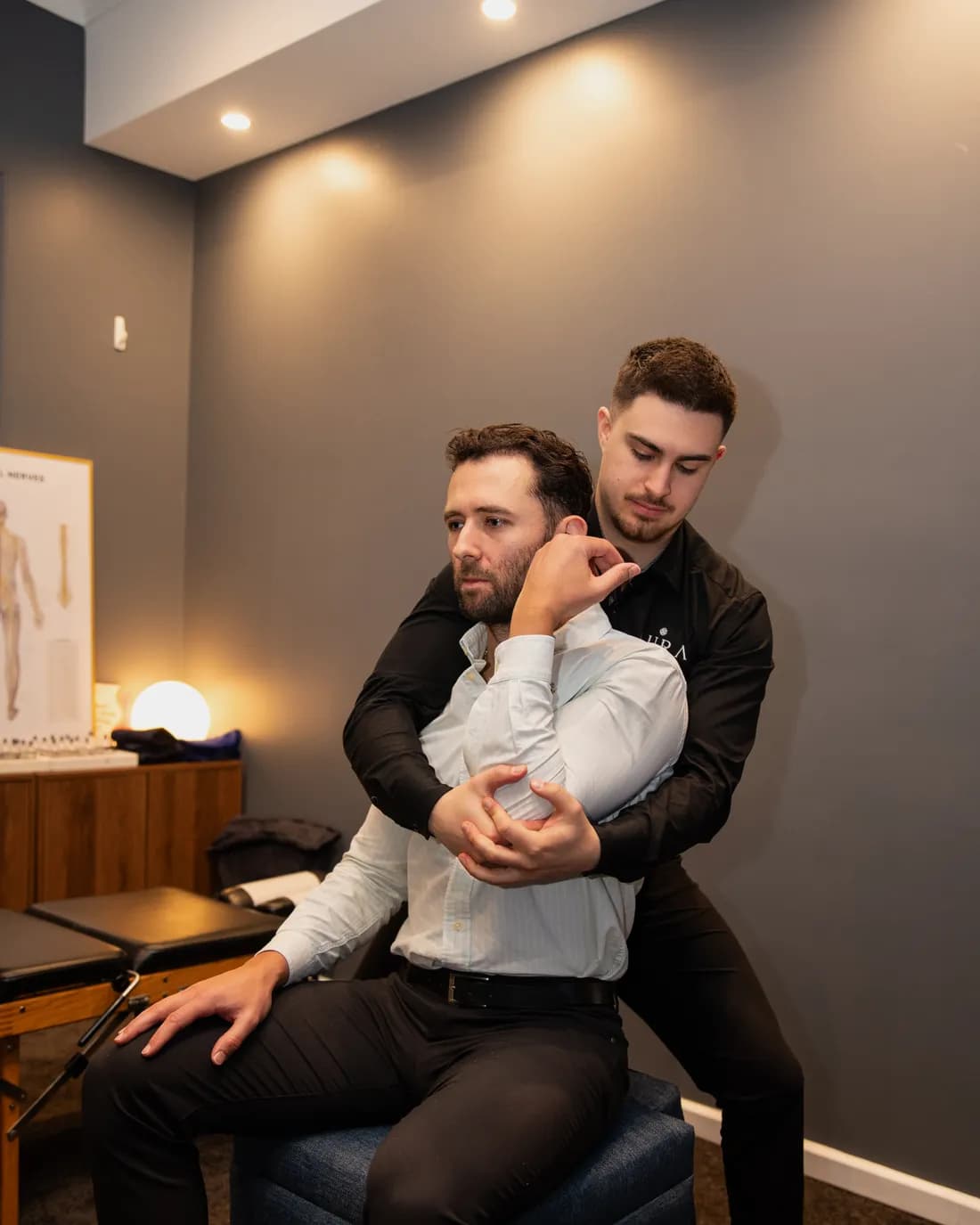
Stage three: Nervous system first chiropractic care
Specific, gentle adjustments directed at what the scans and examination found, re-measured against your own baseline so you can see what has shifted.
Your first visit
What the $99 assessment includes
$99, ordinarily $189. New patients only, one per person, no obligation to continue.
- Full case history
- Spinal examination
- Posture analysis
- Neurological examination
- Heart rate variability (HRV) measurement
- Thermographic (skin-temperature) scans
- Referral for spinal imaging (X-ray) if clinically indicated
Any imaging is charged by the imaging provider, not by Aura, and is not included in the $99.
It is often one, occasionally both. Pain that changes when you move your neck, sits across the shoulder blade, or comes with pins and needles down the arm tends to point to the neck. Pain that is specifically worse on overhead reaching or lying on that side points more to the shoulder joint itself. Our assessment tests both so we are not guessing.
Frozen shoulder is a distinct condition of the shoulder joint capsule with its own course, separate from neck referred pain. We assess for it specifically, and where it is present we will tell you honestly and refer you on to the right care where appropriate, rather than treating it as a neck issue because that is what we specialise in.
Our focus is the cervical and upper thoracic spine, using Gonstead analysis to find and address restricted movement that may be referring pain into the shoulder. Where the shoulder joint itself needs direct care, we will say so and point you toward it.
It depends on what your assessment finds. Some people can keep training with modifications while the underlying cause settles; others need a period of rest from the movements that aggravate it. We will talk through what makes sense for you once we know whether the neck, the shoulder, or both are involved.
The first visit is $99, ordinarily $189. It is for new patients only, one per person, as a one-off payment, with no obligation to continue. Any imaging is charged by the imaging provider and is not included in the $99.
No. Chiropractic is a primary contact profession in Australia, so you can book directly, with no referral needed.
Sources
- 1. Scandinavian Journal of Rheumatology. Prevalence and incidence of shoulder pain in the general population; a systematic review, 2004. View source
- 2. Australian Institute of Health and Welfare (AIHW). Chronic musculoskeletal conditions, 2024. View source
Population figures and guideline positions are drawn from the cited sources. Observations attributed to Dr Arthur Kaganovitch (Chiropractor) reflect his clinical experience at Aura and are not claims of guaranteed outcomes. This page is general information, not a diagnosis or individual advice.
Related
Keep reading

Written by Dr Arthur Kaganovitch (Chiropractor). Last reviewed 8 September 2026.

Your body has been stuck in protection long enough
One visit to measure it. $99, ordinarily $189, no obligation to continue.