We assess
Concussion and the neck in Toorak
Almost every head knock is a neck injury too, and the neck is the part nobody examines. It is also the part we can do something about.
How it tends to show up
Does this sound like you?
01
Neck pain and stiffness that started with the same knock as the headaches
02
Headaches from the base of the skull that have persisted well past the first week
03
Dizziness or unsteadiness that has not settled since the incident
04
Difficulty concentrating or a foggy feeling, alongside a neck that will not loosen
05
Symptoms that flare with screen work, reading, or turning the head
The head rarely gets hit on its own
A force large enough to move the brain inside the skull has also moved the head on top of the neck, rapidly and beyond anything the neck could control. So most head injuries are also neck injuries. The head injury is the frightening one and it takes all of the attention, which is exactly why the neck injury underneath it so often goes unexamined.
That matters because the two produce overlapping symptoms. Headache, dizziness, unsteadiness, difficulty concentrating, sensitivity to busy visual environments and disturbed sleep can all come from a concussion, and every one of them can also come from an injured, guarding upper neck. When symptoms outlast the expected recovery, telling the two apart stops being academic and becomes the most useful question on the table.
Why the upper neck produces these symptoms
The upper neck holds one of the densest concentrations of position sensors in the body. Your brain uses their input alongside your eyes and your inner ear to know where your head is and to keep you steady. It also shares nerve connections with the structures that refer pain into the back of the head, which is why an irritated upper neck so reliably produces headache.
An injured, guarded upper neck sends a noisy and unreliable signal into that system. The result is a brain trying to build a stable picture of the world from three sources, one of which is now disagreeing with the other two. That is a mechanical problem with a mechanical explanation, and it responds to having the mechanics addressed.
Dr Arthur Kaganovitch (Chiropractor) sees this most in the people whose symptoms have outlasted the expected recovery window. Weeks or months after the incident, still foggy, still headachy, still unsteady, with a neck that has been stiff the entire time and has never been properly looked at. The neck is not always the answer. It is often the part of the question nobody has asked.
What we can work with, and what we cannot
We do not treat the brain injury itself, we do not diagnose concussion, and we do not clear anyone to return to sport or work. There is no protocol here that claims to speed brain recovery, and you should be wary of anyone offering one.
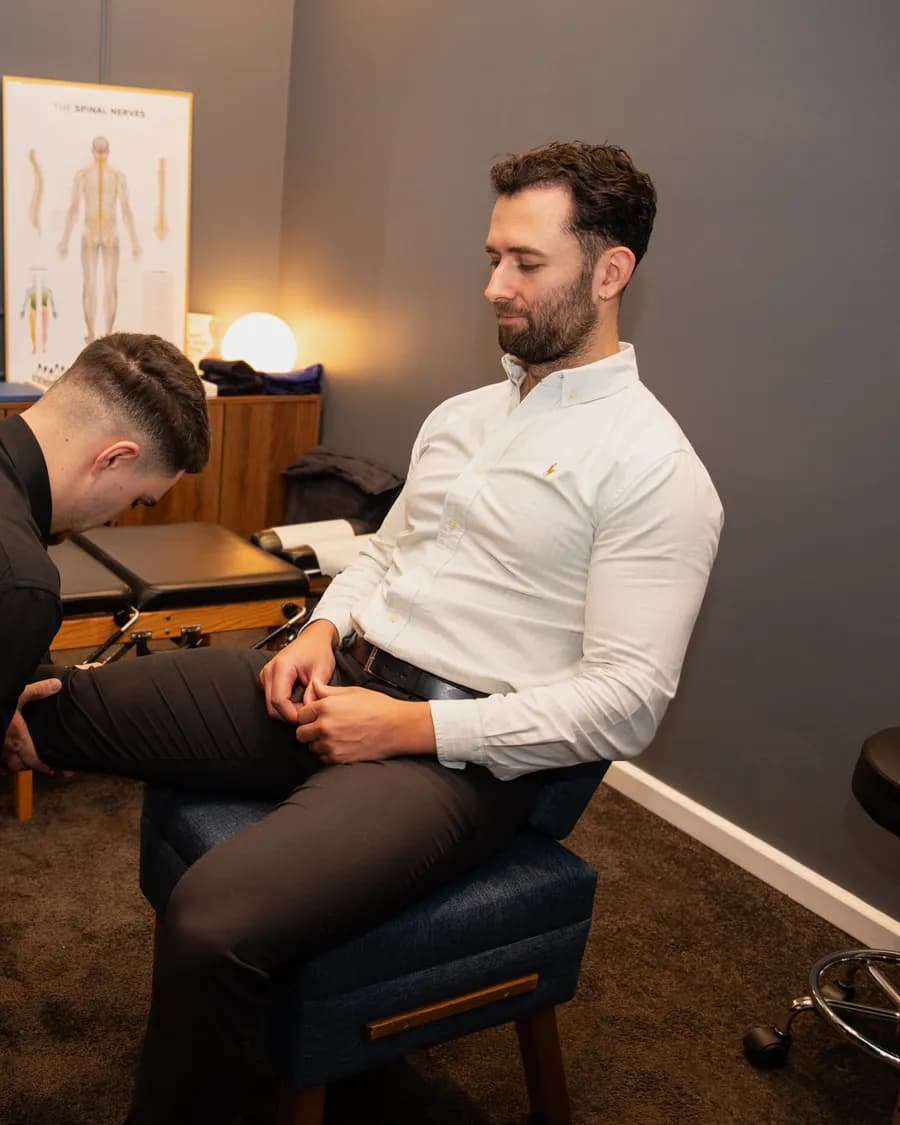
What we work with is the neck. Which joints have lost their normal movement, how hard the surrounding muscles are guarding, what the neurological examination shows, and whether that picture plausibly accounts for the symptoms that have persisted. Where it does, care is directed there, gently and specifically. Where it does not, we will tell you that, and knowing it is worth the visit.
When to seek urgent medical care
Call 000 or go to an emergency department immediately after a head injury for a headache that is severe or getting worse, repeated vomiting, drowsiness or difficulty waking, confusion or unusual behaviour, a seizure, weakness or numbness in the limbs, slurred speech, clear fluid from the nose or ears, or a loss of consciousness at any point.
Anyone on blood thinning medication, or anyone who has had a previous head injury in the recent past, should be medically assessed after any head knock regardless of how they feel. A child or adolescent who has taken a knock to the head during sport should be removed from play and assessed the same day, and the decision about returning to play is a medical one.
What we do
Your assessment begins with the history of the incident and of everything since: what happened, what you felt, what has changed, what has and has not settled, and what care you have already had.
From there it is a full spinal and neurological examination with detailed attention to the upper neck, posture analysis, heart rate variability measurement and thermographic scans, all part of the $99 assessment. The scans earn their place here, because they give an objective read of a nervous system that has been through a significant event and may still be sitting in a protective state months later.
Then Dr Arthur explains what was found in plain language, and what care would reasonably aim at in your case.
What we do
Measure first, then care for the cause
Most care treats the symptom. We measure the nervous system driving it, explain it plainly, then care for what we found.

Stage one: Book an initial consultation
One visit, $99, ordinarily $189. A full history and examination so we understand what your body has been carrying and for how long.
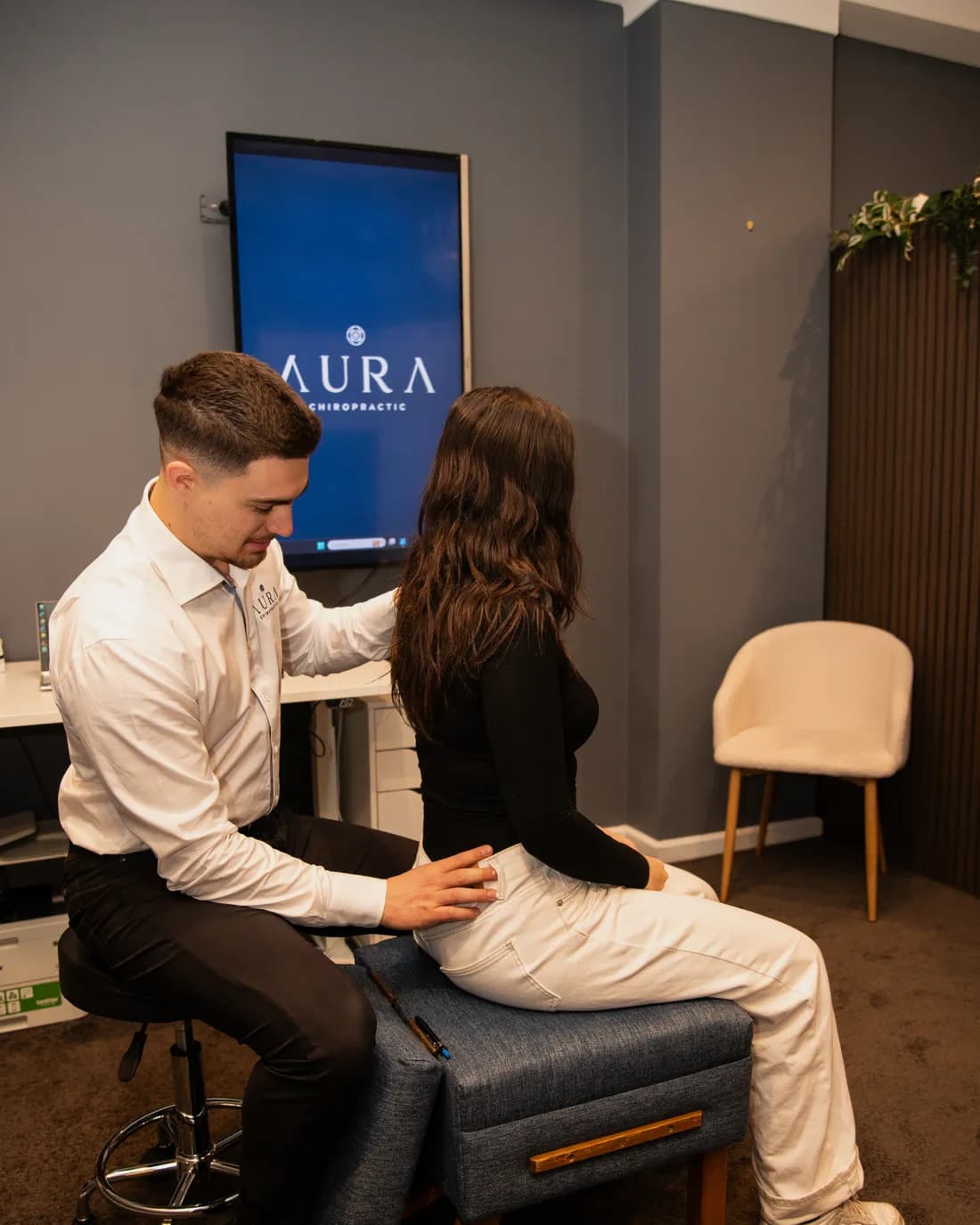
Stage two: Neurological scans and Report of Findings
Dr Arthur Kaganovitch (Chiropractor) explains all the different scans and results and comes up with a bespoke, unique plan for your needs.
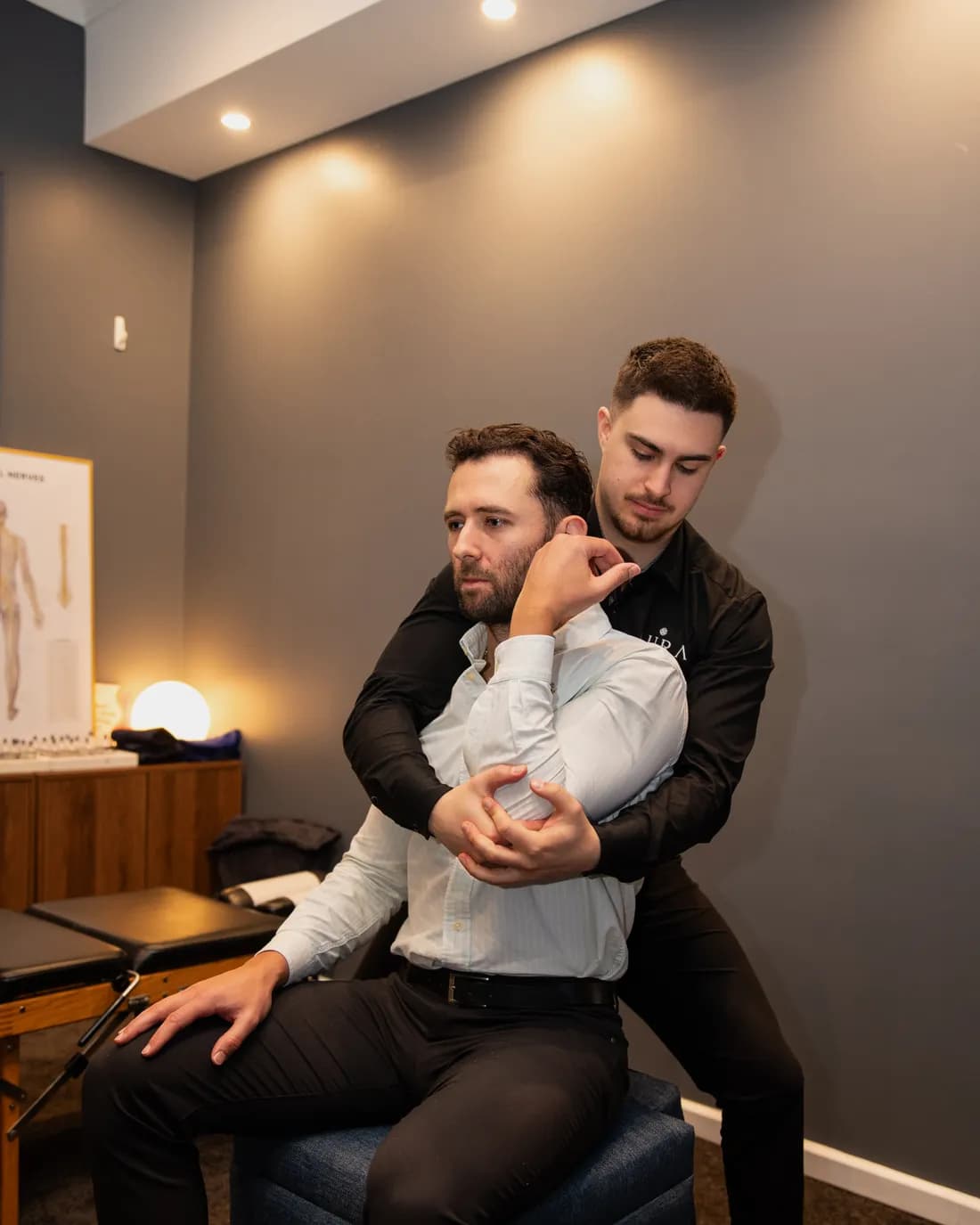
Stage three: Nervous system first chiropractic care
Specific, gentle adjustments directed at what the scans and examination found, re-measured against your own baseline so you can see what has shifted.
Your first visit
What the $99 assessment includes
$99, ordinarily $189. New patients only, one per person, no obligation to continue.
- Full case history
- Spinal examination
- Posture analysis
- Neurological examination
- Heart rate variability (HRV) measurement
- Thermographic (skin-temperature) scans
- Referral for spinal imaging (X-ray) if clinically indicated
Any imaging is charged by the imaging provider, not by Aura, and is not included in the $99.
Not the brain injury itself, and we would not claim otherwise. What we assess and care for is the neck injury that so often accompanies it, which can be responsible for a real share of the symptoms that persist.
That is the most common reason people come to us with this. Being cleared means the serious concerns have been excluded. It does not mean the neck has been examined. If headaches, dizziness and stiffness have outlasted the expected recovery, the upper neck is the obvious next place to look.
In the first days the priority is rest and making sure nothing serious has been missed. Once that is settled, an assessment of the neck is worthwhile, and the sooner it happens the less time the neck spends locked into a guarding pattern.
Remove them from play immediately and have them assessed the same day, and follow the return to play guidance their sport provides. If neck stiffness and headaches persist afterwards, that is when an assessment here adds something.
The first visit is $99, ordinarily $189. It is for new patients only, one per person, as a one-off payment, with no obligation to continue. Any imaging is charged by the imaging provider and is not included in the $99.
No. Chiropractic is a primary contact profession in Australia, so you can book directly, with no referral needed.
Observations attributed to Dr Arthur Kaganovitch (Chiropractor) reflect his clinical experience at Aura and are not claims of guaranteed outcomes. This page is general information, not a diagnosis or individual advice.
Related
Keep reading
Children and infants
Whiplash
Neck pain

Headaches and migraines
Fight, flight and freeze: the three responses, and what freeze looks like
From the journal
Most people know fight and flight. Fewer recognise freeze, which is often what a burnt-out professional or an overwhelmed child is actually in. The three responses explained, and how we measure them.
The Gonstead method, explained: analysis before adjustment
From the journal
Why we analyse before we adjust. The five steps of the Gonstead system, what the instrument and the X-ray are for, and why specificity is the whole point.
Written by Dr Arthur Kaganovitch (Chiropractor). Last reviewed 8 September 2026.

Your body has been stuck in protection long enough
One visit to measure it. $99, ordinarily $189, no obligation to continue.