We treat
Disc bulge and disc injury care in Toorak
A disc finding on a scan can sound alarming. Most are common, most settle, and our work is to find what is actually driving your symptoms.
How it tends to show up
Does this sound like you?
01
A deep, central ache in the low back that can spread into the buttock or leg
02
Pain that is worse sitting or bending forward, and eases lying down or walking
03
A sharp catch or spasm after lifting, twisting or a sudden movement
04
Numbness, tingling or a heavy feeling running down one leg
05
A back that feels guarded, stiff first thing and slow to loosen through the day
What a disc bulge, protrusion or herniation actually means
Each disc sits between two vertebrae, a tough outer ring around a softer, gel-like centre, acting as a spacer and shock absorber. When that outer ring weakens or is put under uneven load, the centre can press outward. A small, even bulge is the mildest version of this. A protrusion is a more localised bulge, and a herniation is where some of the inner material pushes further out, sometimes through a tear in the ring.
These terms describe what a scan sees, not how much pain a person feels. The two often do not match up, which surprises most people the first time they hear it. A large herniation can sit quietly with no symptoms, while a small bulge in the wrong place, pressing on a nerve root, can be intensely painful. Position and irritation matter more than size alone.
Discs also change gradually with ordinary use. Years of sitting, lifting, twisting and simply ageing dry out and stiffen the disc over time, the same way skin and joints change through life. A bulge is often part of that slow, normal process rather than a single dramatic event, even when the pain that brings it to your attention arrives suddenly.
How common these findings are in people with no pain at all
A large review of imaging studies pooled scans from thousands of people with no back pain at all and found disc bulges, degeneration and even herniations were common at every age, rising steadily from the 20s onward.[1] By age 50, disc bulges were present in roughly half of pain-free adults; by age 40, disc degeneration was present in around two thirds.[1]
That does not mean bulges never matter. It means a bulge on a scan is often just part of a normal, ageing spine, not proof of the cause of your pain. Reading a report in isolation, without an examination to match it against how you actually move and where you actually hurt, can lead someone to fear a finding that was never the problem.
Why we do not order imaging first
Because disc findings are so common in pain-free people, ordering a scan for every sore back risks flagging something unrelated and worrying a person more, not less. Guidelines reflect this: imaging is reserved for when red flags are present, when symptoms are not settling as expected, or when the result would genuinely change the plan.[2]
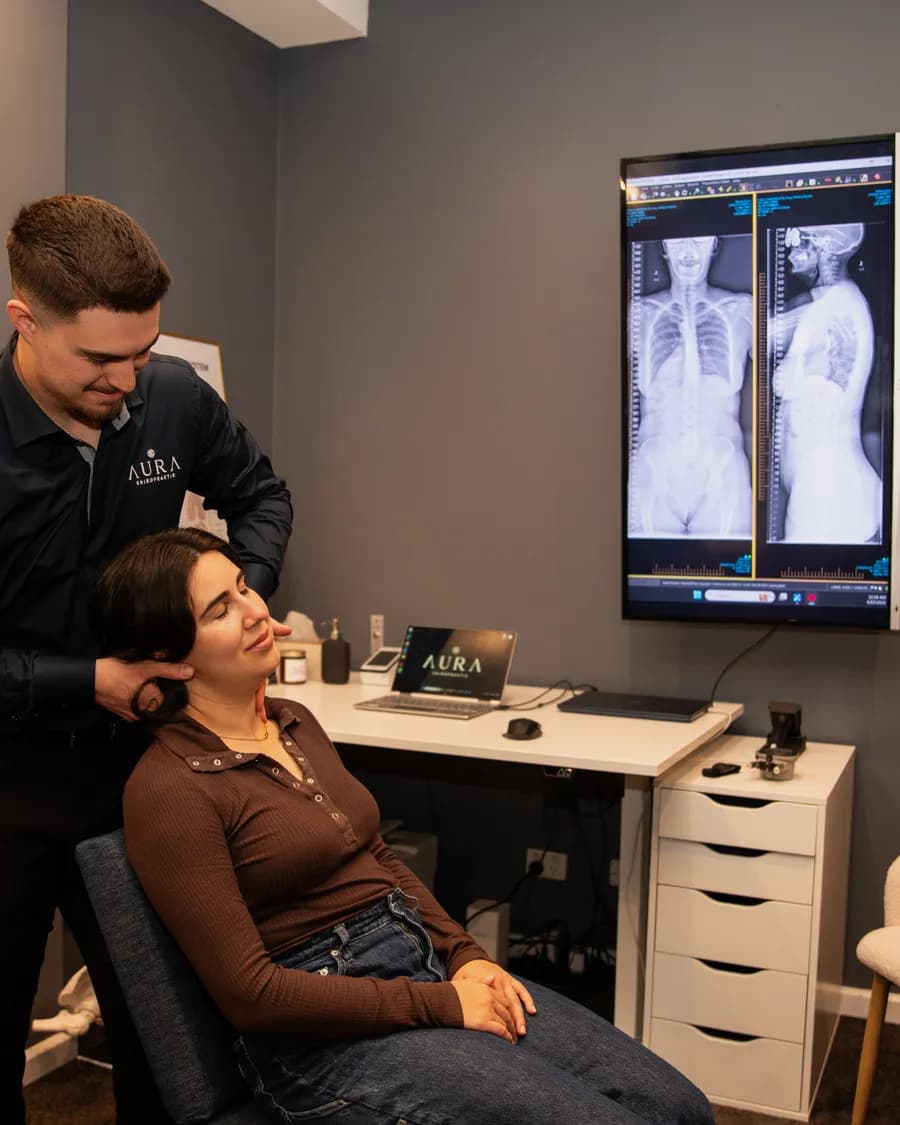
So we examine first. Your assessment includes a full case history, a spinal and neurological examination, and if imaging is clinically indicated we refer you for it. Any imaging is charged by the imaging provider, not by Aura.
The nervous system picture
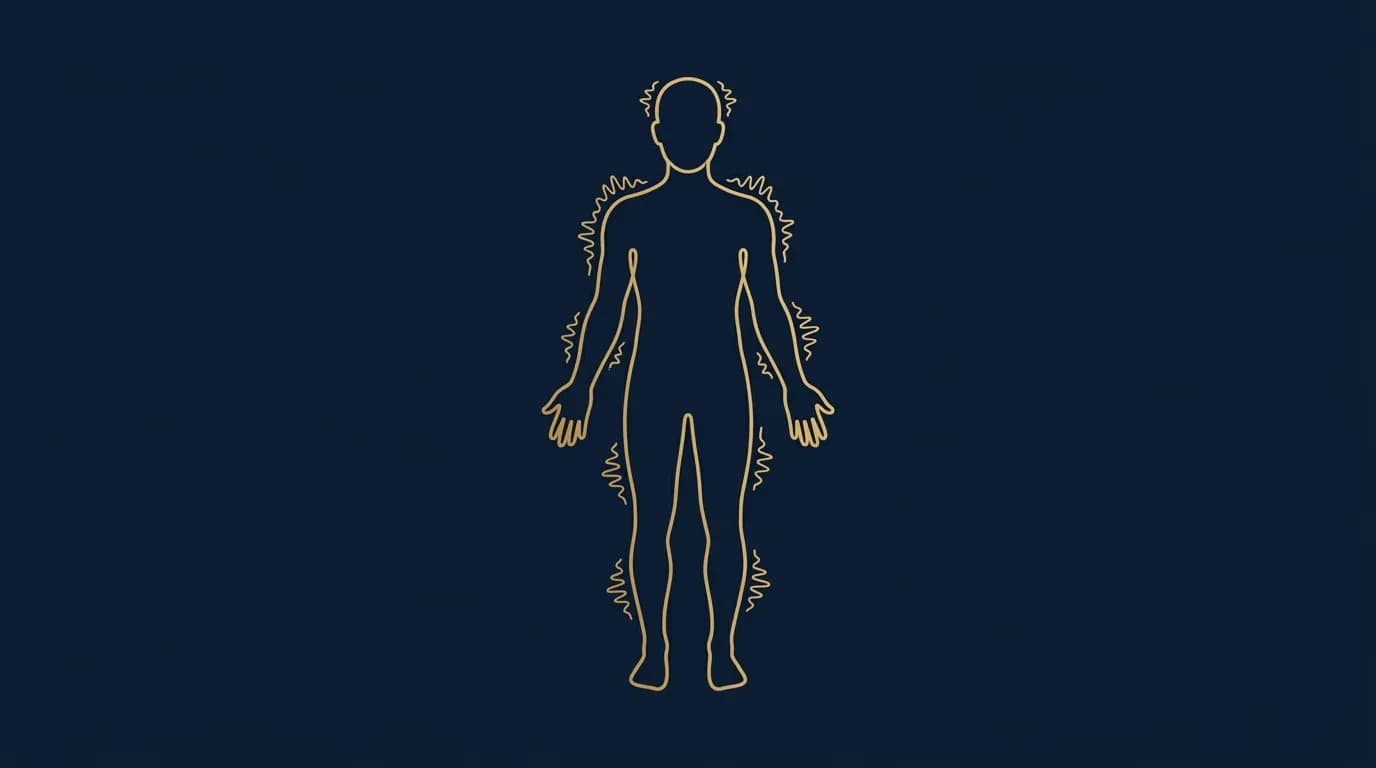
Dr Arthur Kaganovitch (Chiropractor) sees a consistent pattern with disc-related pain: the area around an irritated segment tightens and guards, and the surrounding muscles brace to protect it. That guarding can outlast the original injury, keeping a back stiff and reactive long after the tissue itself has started to settle. A back held in protection mode moves less, which can slow the very recovery it is trying to defend.
His approach is regulation before adjustment. Heart rate variability and thermographic scans show how the nervous system is holding tension around the area, alongside the physical examination of how the segment moves. Care is then directed at what was actually found, easing the guarding and restoring movement to the segment, not just the spot where it hurts.
This is why two people with an identical bulge on a scan can have very different experiences. One may be pain free and unaware it is there; the other may be guarding heavily around it, with the nervous system amplifying the signal well beyond the disc itself. Assessing the whole picture, not just the imaging, is how we tell the two apart.
When disc symptoms need urgent medical care
A small number of disc presentations are medical emergencies and need same-day assessment, not a chiropractic visit. Seek urgent medical care straight away if you notice any new bladder or bowel changes, numbness in the saddle area (between the legs, inner thighs or around the genitals), or progressive weakness in one or both legs. These can signal significant pressure on the nerves at the base of the spine and need immediate attention.
Outside of those red flags, most disc-related back pain is safe to have assessed and cared for conservatively. We screen for these signs at every first visit as a matter of course.
What we do
Once the red flags are ruled out, the same measure-first approach we use for every condition applies here.
- We find the driver: a full case history and spinal and neurological examination to work out which segment is irritated and how it is affecting the surrounding nerves and muscles.
- We measure your system: heart rate variability and thermographic scans show how your nervous system is holding stress and guarding around the area.
- We settle and support it: care directed at the segment's movement, chosen after the examination, to ease pressure and reduce the guarding that keeps a back stiff and reactive.
What we do
Measure first, then care for the cause
Most care treats the symptom. We measure the nervous system driving it, explain it plainly, then care for what we found.

Stage one: Book an initial consultation
One visit, $99, ordinarily $189. A full history and examination so we understand what your body has been carrying and for how long.
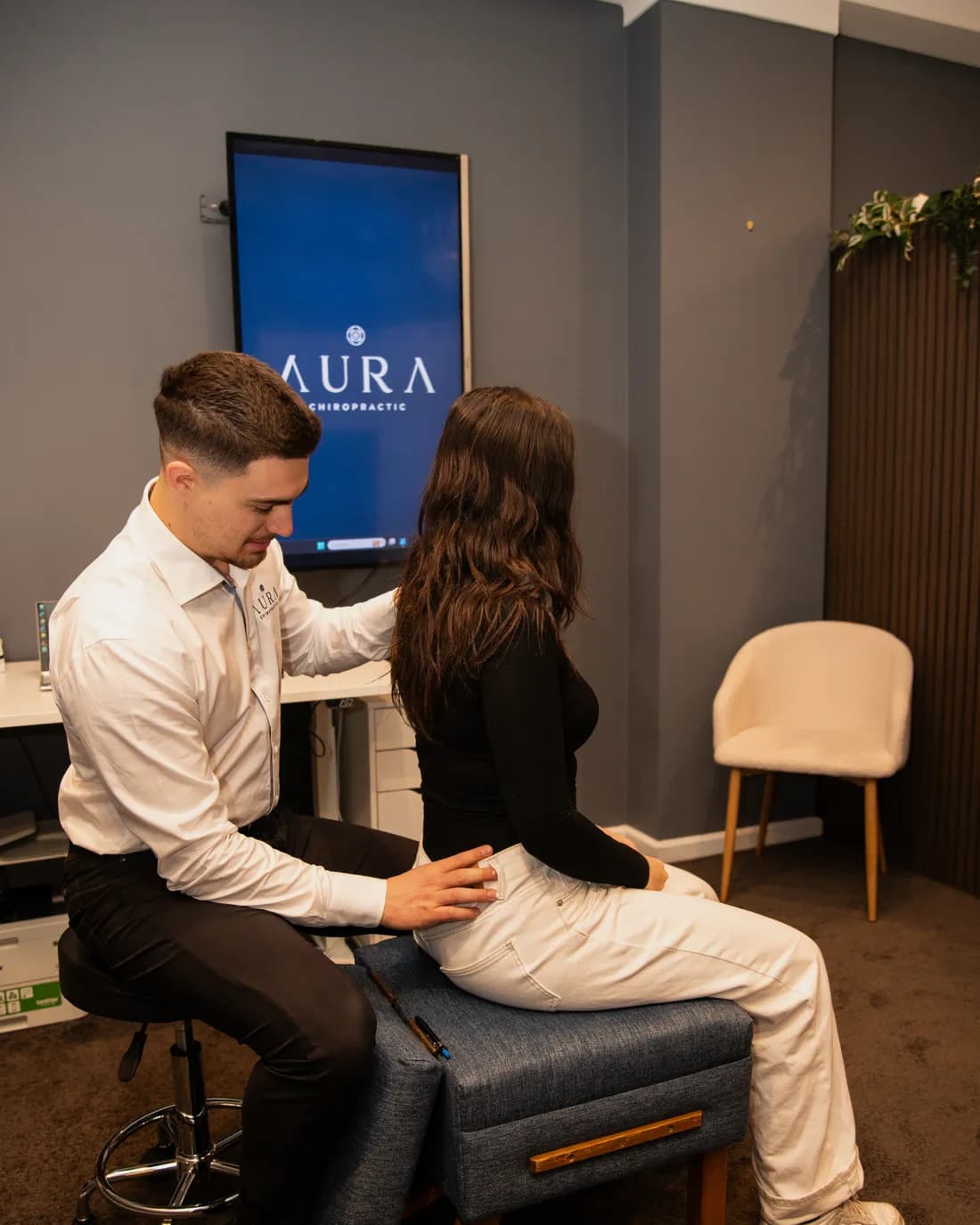
Stage two: Neurological scans and Report of Findings
Dr Arthur Kaganovitch (Chiropractor) explains all the different scans and results and comes up with a bespoke, unique plan for your needs.
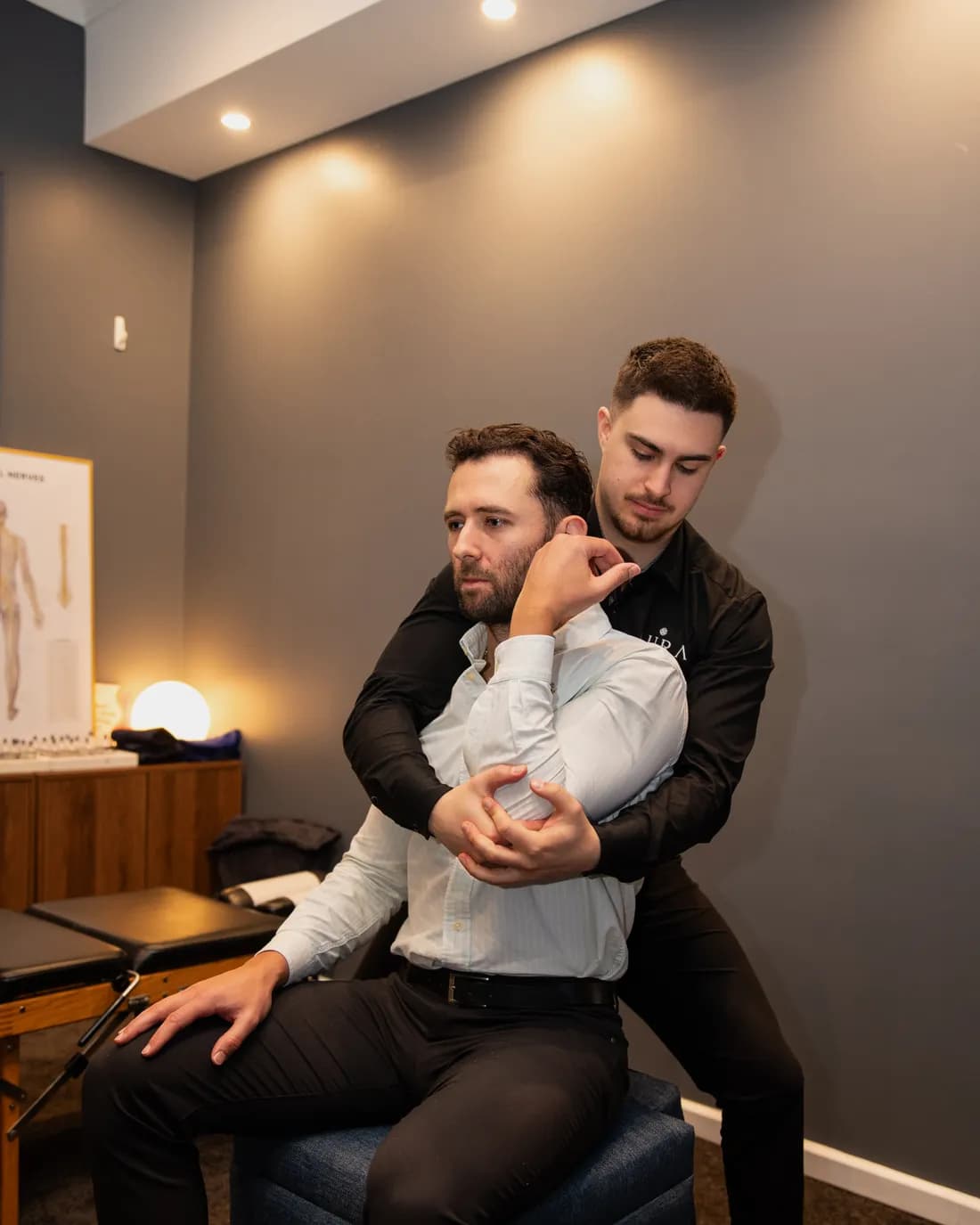
Stage three: Nervous system first chiropractic care
Specific, gentle adjustments directed at what the scans and examination found, re-measured against your own baseline so you can see what has shifted.
Your first visit
What the $99 assessment includes
$99, ordinarily $189. New patients only, one per person, no obligation to continue.
- Full case history
- Spinal examination
- Posture analysis
- Neurological examination
- Heart rate variability (HRV) measurement
- Thermographic (skin-temperature) scans
- Referral for spinal imaging (X-ray) if clinically indicated
Any imaging is charged by the imaging provider, not by Aura, and is not included in the $99.
Not usually as a first step. Most disc findings are common even in pain-free people, so guidelines reserve imaging for when red flags are present or the result would change the plan. Your assessment includes a full spinal and neurological examination, and if imaging is clinically indicated we will refer you for it.
A bulge is a structural finding, not a fixed sentence for how you will feel. Many people carry disc bulges with no pain at all, and symptoms from an irritated disc often settle as the surrounding guarding and movement improve. We assess your spine directly rather than relying on a scan report alone.
The adjustment is directed at the segment's movement, chosen after a full examination of your spine and nervous system, not applied generically to every disc finding. Not everyone is a candidate for the same care, which is why the assessment comes first. If your case needs a different approach, or urgent medical review, we will tell you plainly.
For most people, yes, with some adjustments to how you sit, lift and move through the day. We will talk through what to modify based on what your examination shows. If you notice new bladder or bowel changes, saddle numbness or progressive leg weakness, stop and seek urgent medical care.
The first visit is $99, ordinarily $189. It is for new patients only, one per person, as a one-off payment, with no obligation to continue. Any imaging is charged by the imaging provider and is not included in the $99.
No. Chiropractic is a primary contact profession in Australia, so you can book directly, with no referral needed.
Sources
- 1. American Journal of Neuroradiology (AJNR). Systematic literature review of imaging features of spinal degeneration in asymptomatic populations, 2015. View source
- 2. National Institute for Health and Care Excellence (NICE). Low back pain and sciatica in over 16s: assessment and management (NG59), 2016, updated 2020. View source
- 3. Australian Institute of Health and Welfare (AIHW). Back problems, 2024. View source
Population figures and guideline positions are drawn from the cited sources. Observations attributed to Dr Arthur Kaganovitch (Chiropractor) reflect his clinical experience at Aura and are not claims of guaranteed outcomes. This page is general information, not a diagnosis or individual advice.
Related
Keep reading
Lower back pain
Sciatica
Understanding lower back pain, and what actually helps it settle
From the journal
Lower back pain is the most disabling condition of working age, yet the vast majority of it is not what people fear. A researched, plainly written look at how common it really is, what tends to cause it, the part your nervous system plays, what the evidence says helps, and the myths worth retiring.
The Gonstead method, explained: analysis before adjustment
From the journal
Why we analyse before we adjust. The five steps of the Gonstead system, what the instrument and the X-ray are for, and why specificity is the whole point.
Written by Dr Arthur Kaganovitch (Chiropractor). Last reviewed 8 September 2026.

Your body has been stuck in protection long enough
One visit to measure it. $99, ordinarily $189, no obligation to continue.