We assess
Scoliosis assessment in Toorak
A sideways curve in the spine is a finding, not a verdict. What matters is how much, whether it is changing, and what it is asking the rest of the body to do.
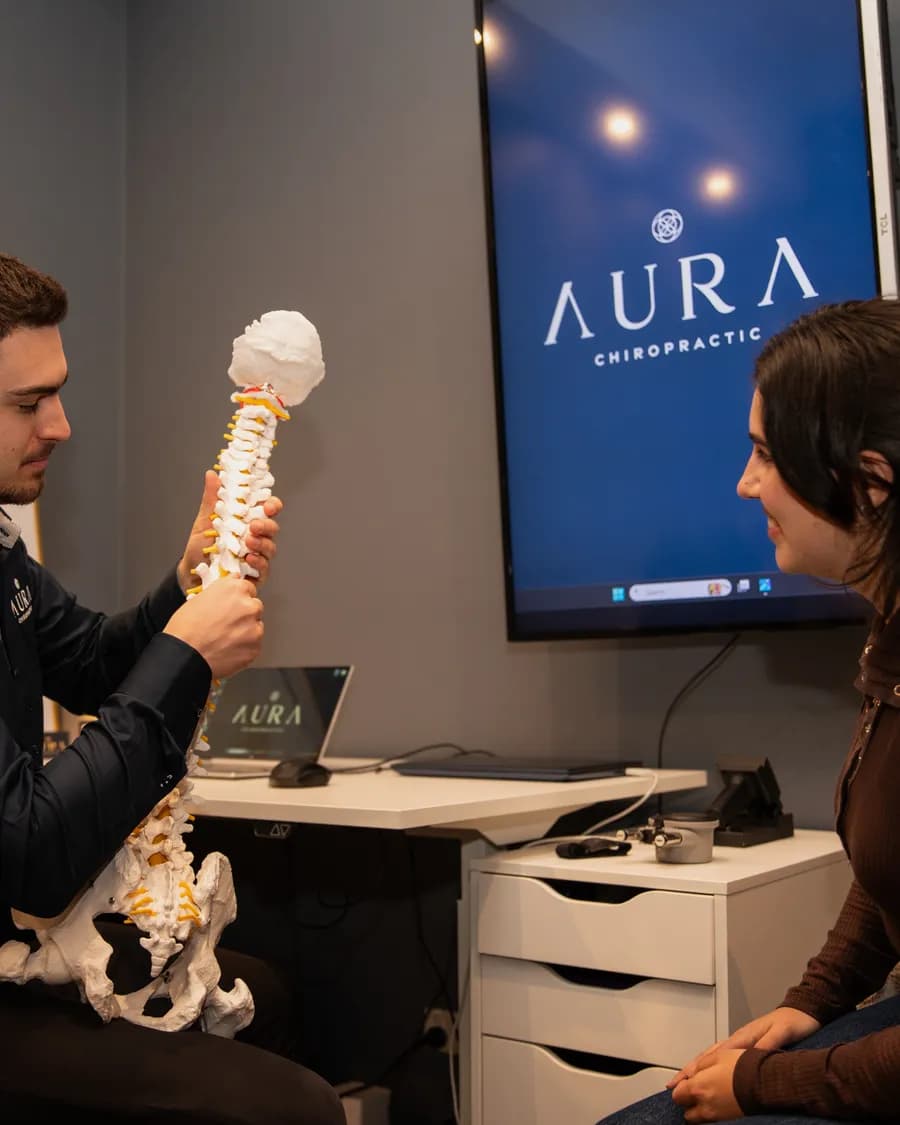
How it tends to show up
Does this sound like you?
01
One shoulder or one hip sitting visibly higher than the other
02
A shoulder blade or a rib that stands out on one side when bending forward
03
Clothes that hang unevenly, or a waistline that looks asymmetrical in the mirror
04
An adolescent growing quickly whose posture has visibly changed over a few months
05
Back ache in an adult with a known curve, worse after long standing or sitting
What scoliosis is
Scoliosis is a sideways curve of the spine, usually with an element of rotation, so the ribs and shoulder blades turn slightly with it. That rotation is why a curve is often easiest to see when someone bends forward rather than when they stand up straight. On an X-ray it is measured as an angle, and that measurement is what specialists use to decide whether anything needs to be done.
Most adolescent scoliosis is idiopathic, which means there is no identified cause. It is not the result of a heavy schoolbag, sitting badly or sleeping on one side, and it is worth saying that plainly because parents often arrive carrying a version of that guilt. Small curves are common and many never cause a symptom or need anything beyond keeping an eye on them.
Why monitoring matters more than worry
In a growing adolescent, the question is not only how large the curve is today. It is whether it is changing, and how much growing is left, because a curve is most likely to progress through a growth spurt. That makes a curve found at twelve a different conversation from the same curve found at seventeen, and it is why sensible management often looks like structured monitoring rather than immediate intervention.
In an adult, an established curve is usually stable. What tends to bring adults in is not the curve itself but the load it creates: the areas above and below working harder to keep the eyes level and the body upright, and complaining about it after a long day.
What chiropractic care can and cannot do here
We will be direct about this, because the field is not always. A chiropractic adjustment does not straighten a structural curve. Anyone promising to correct scoliosis with adjustments is promising something the intervention does not do.
What we can work with is everything the curve is asking of the rest of the body: joints above and below the curve that have lost their normal movement, the muscular guarding that builds around them, and the comfort and mobility of a spine that is carrying an uneven load all day. That is a real and worthwhile aim, and it is a different claim from changing the curve.
Bracing and surgery are specialist decisions, and where a curve is heading that way our part is to keep the spine around it moving well and comfortably while that is managed.
When scoliosis needs specialist referral
See your doctor promptly, and expect a specialist referral, for a curve that appears to be increasing over months, a curve found in a young child, a curve accompanied by neurological symptoms such as numbness, weakness or changes in bladder or bowel function, or pain that is severe, constant or waking someone at night.
These are the presentations where imaging and specialist assessment come before anything else, and part of what an assessment here is for is to recognise them.
What we do
Your assessment includes a full case history, posture analysis, a spinal examination including a forward bend test to look for the rotational component, and a neurological examination. Together that tells us whether we are looking at a structural curve or a functional one, meaning a body leaning away from something rather than a spine that is genuinely shaped that way, and those two are managed very differently.
We measure heart rate variability and run thermographic scans as part of the same assessment, and we refer for spinal imaging if what we find clinically indicates it. Any imaging is charged by the imaging provider, not by Aura.
Then Dr Arthur Kaganovitch (Chiropractor) explains what was found in plain language, and what care would reasonably aim at in your case.
What we do
Measure first, then care for the cause
Most care treats the symptom. We measure the nervous system driving it, explain it plainly, then care for what we found.

Stage one: Book an initial consultation
One visit, $99, ordinarily $189. A full history and examination so we understand what your body has been carrying and for how long.
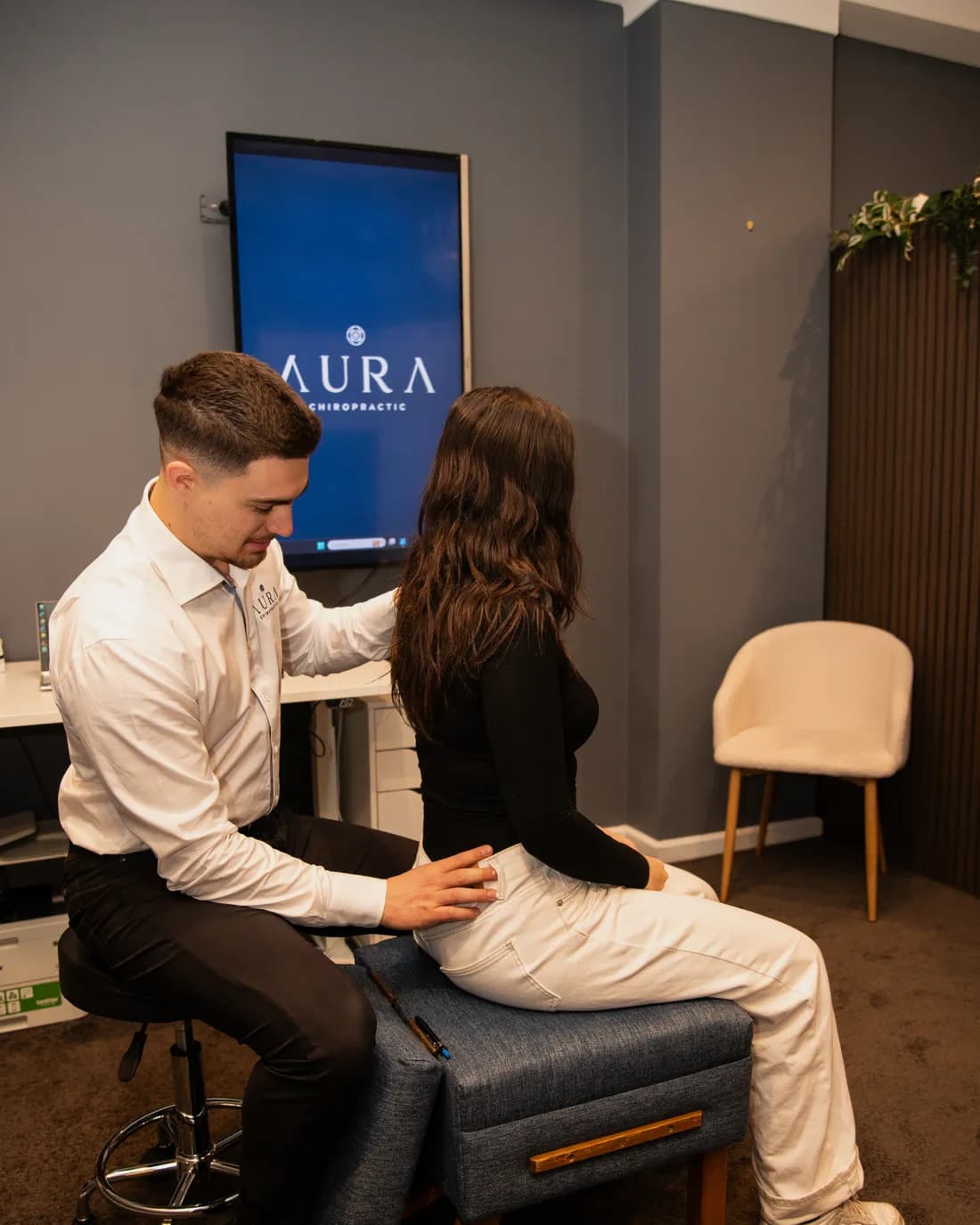
Stage two: Neurological scans and Report of Findings
Dr Arthur Kaganovitch (Chiropractor) explains all the different scans and results and comes up with a bespoke, unique plan for your needs.
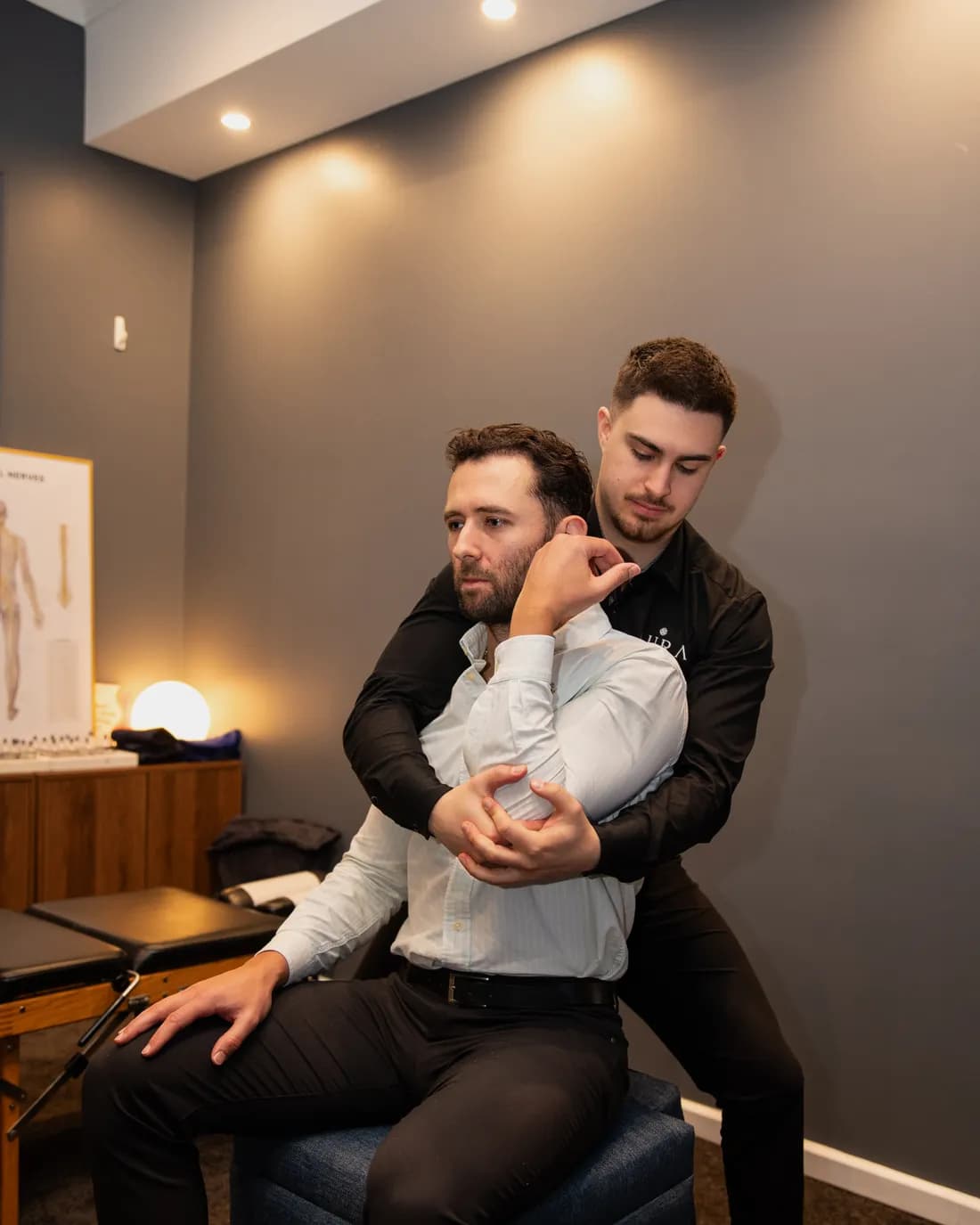
Stage three: Nervous system first chiropractic care
Specific, gentle adjustments directed at what the scans and examination found, re-measured against your own baseline so you can see what has shifted.
Your first visit
What the $99 assessment includes
$99, ordinarily $189. New patients only, one per person, no obligation to continue.
- Full case history
- Spinal examination
- Posture analysis
- Neurological examination
- Heart rate variability (HRV) measurement
- Thermographic (skin-temperature) scans
- Referral for spinal imaging (X-ray) if clinically indicated
Any imaging is charged by the imaging provider, not by Aura, and is not included in the $99.
No, and we will not tell you otherwise. Adjustments do not change the structural shape of a curve. What care can address is the movement, load and comfort of the spine around it, which is a different and more honest aim.
Mild curves in adolescents are usually monitored rather than treated, with the key question being whether the curve changes as they grow. An assessment here gives you a baseline of how they are moving and loading, and clear guidance on when a specialist opinion is warranted.
In most established, stable curves, care directed at the joints that have lost movement is appropriate, and it is adapted to what the examination finds rather than applied as a standard routine. Where a curve is progressing, or where there are neurological findings, specialist assessment comes first.
Not automatically. Imaging is the only way to measure a curve properly, so it is genuinely useful when the clinical picture suggests a structural scoliosis or when the curve needs monitoring over time. If your examination indicates it, we will refer you, and the imaging provider charges for it directly.
The first visit is $99, ordinarily $189. It is for new patients only, one per person, as a one-off payment, with no obligation to continue. Any imaging is charged by the imaging provider and is not included in the $99.
No. Chiropractic is a primary contact profession in Australia, so you can book directly, with no referral needed.
Observations attributed to Dr Arthur Kaganovitch (Chiropractor) reflect his clinical experience at Aura and are not claims of guaranteed outcomes. This page is general information, not a diagnosis or individual advice.
Related
Keep reading
Children and infants
Posture
Lower back pain
Neck pain
Desk posture: what actually matters, and what does not
From the journal
The perfect chair will not save your neck. What the research says about sitting, why variation and breaks matter more than a single correct position, and what a guarded posture is telling you.
The Gonstead method, explained: analysis before adjustment
From the journal
Why we analyse before we adjust. The five steps of the Gonstead system, what the instrument and the X-ray are for, and why specificity is the whole point.
Written by Dr Arthur Kaganovitch (Chiropractor). Last reviewed 8 September 2026.
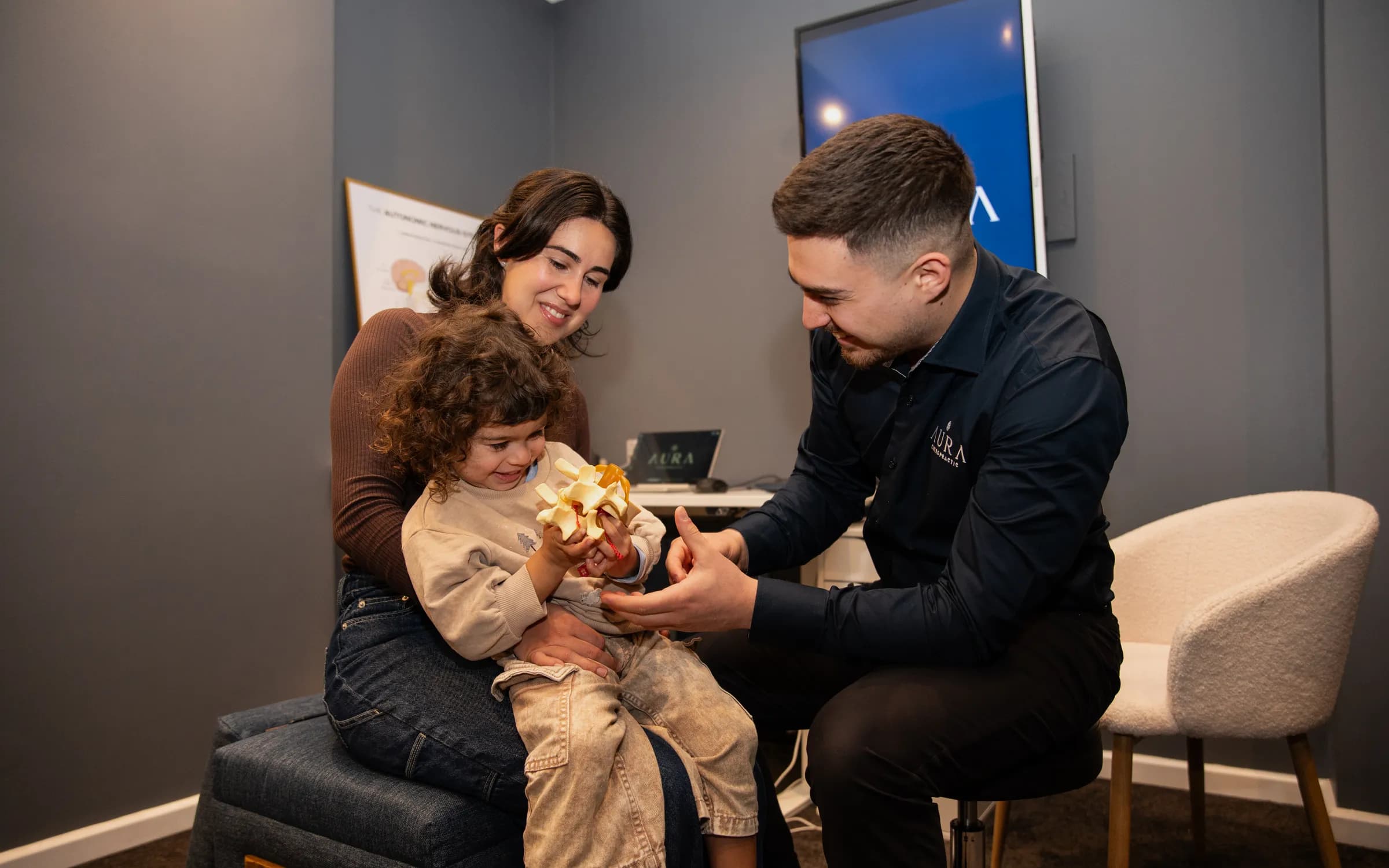
Your body has been stuck in protection long enough
One visit to measure it. $99, ordinarily $189, no obligation to continue.