We treat
TMJ and jaw pain in Toorak
A jaw that clicks, aches or will not unclench is rarely working alone. The neck and the nervous system are usually part of the same story.
How it tends to show up
Does this sound like you?
01
A jaw that clicks, pops or catches when you open wide or chew
02
Aching along the jawline or in front of the ear, often worse by the end of the day
03
Waking with a tight jaw, or being told you grind your teeth at night
04
Headaches in the temples, or a dull ache behind the eyes
05
Neck and shoulder tension that seems to travel up into the face
What the TMJ is, and why it complains
The temporomandibular joint is the hinge just in front of each ear where the jaw meets the skull. It is an unusual joint: it hinges and it slides, it has a small disc of cartilage inside it, and the two sides are locked together by one bone, so neither can move without the other. That last point matters, because it means a problem on one side is felt as an unfair workload on both.
It is also one of the most used joints in the body. Talking, chewing, swallowing, yawning, and for many people a great deal of clenching that they are unaware of. Clicking on its own, with no pain and no restriction, is common and often means nothing. Clicking with pain, with a jaw that locks or with a bite that has changed, is worth assessing.
Why the neck is nearly always involved
The jaw does not sit on top of a fixed post. It hangs from a skull that is balanced on the top of the neck, and the muscles that close the jaw share nerve supply and reflex connections with the muscles that hold the head up. When the upper neck is stiff or guarding, the resting position of the head changes, and the jaw has to work from a different starting point.
That is why jaw pain, upper neck tightness and headaches in the temples so often arrive as a set. Treating the jaw as an isolated joint, without looking at what the neck underneath it is doing, tends to be the reason people find relief that does not hold.
Clenching is a nervous system habit
Dr Arthur Kaganovitch (Chiropractor) sees the pattern most often in exactly the people you would expect: those working long, high pressure days who are clenching through meetings without noticing, and grinding through the night on top of it. The jaw is one of the first places a body under sustained load starts to hold tension, alongside the shoulders and the breath.
That reframes the problem usefully. If the clenching is a nervous system that has not come down out of alert, then a night guard protects the teeth, which is worth doing, but it does not address why the jaw is being driven that hard in the first place. Care aimed only at the joint leaves the driver running.
So the work here is on both: restoring movement where the upper neck and the jaw have lost it, and settling a system that has been holding on. The teeth themselves stay with your dentist.
When jaw pain needs other care first
See your dentist for tooth pain, a bite that has suddenly changed, a broken or cracked tooth, or an abscess, because dental causes of jaw pain need dental treatment. See a doctor urgently for a jaw that has locked open and will not close, for facial swelling with fever, or for jaw pain that comes on with exertion and is accompanied by chest, arm or neck discomfort, which needs immediate medical assessment.
These are uncommon, and screening for them is part of why the assessment starts with a full history rather than with the jaw.
What we do
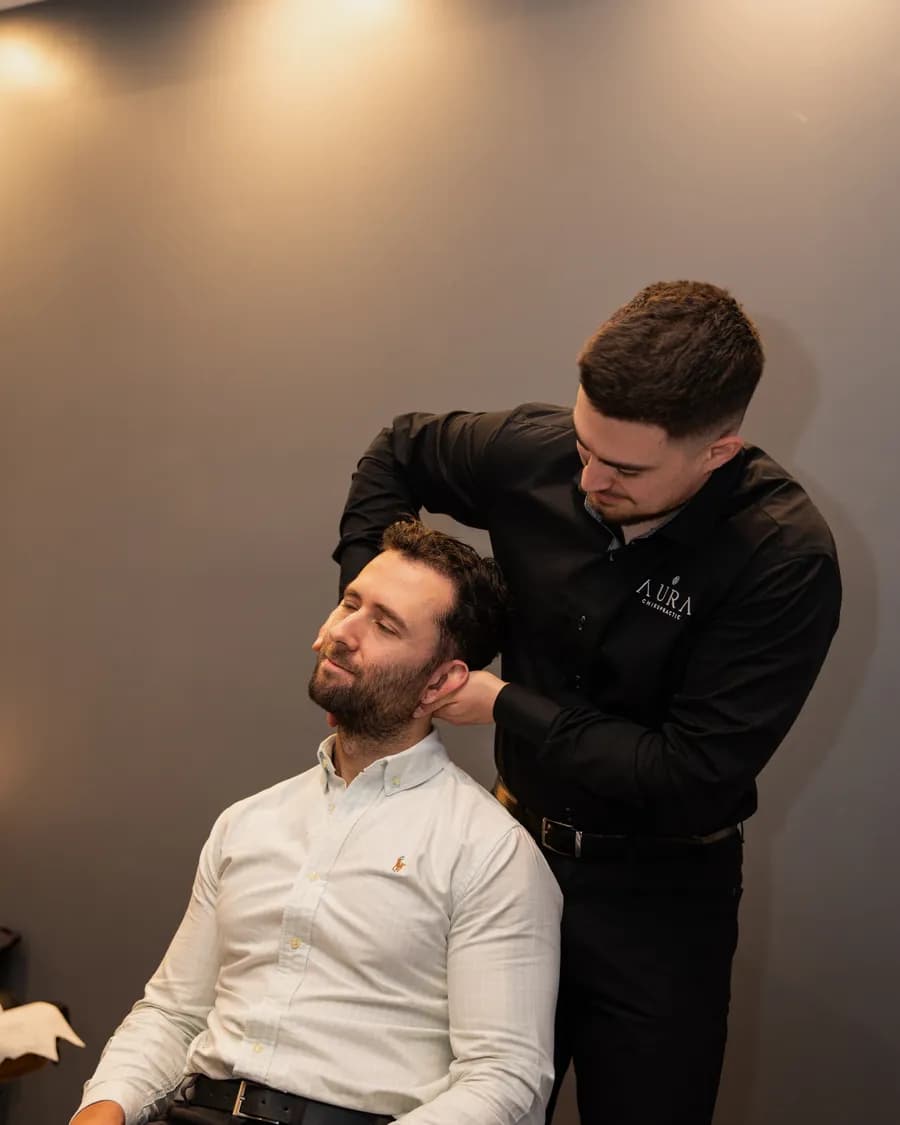
Your assessment includes a full case history, examination of the jaw joint and how it moves and tracks when you open and close, and a full spinal and neurological examination with particular attention to the upper neck, since that is where the connection usually lives.
We measure heart rate variability and run thermographic scans, which is how we see whether a system is sitting in the state that would explain the clenching, and we refer for spinal imaging if the examination indicates it. Then you get the findings explained in plain language.
What we do
Measure first, then care for the cause
Most care treats the symptom. We measure the nervous system driving it, explain it plainly, then care for what we found.

Stage one: Book an initial consultation
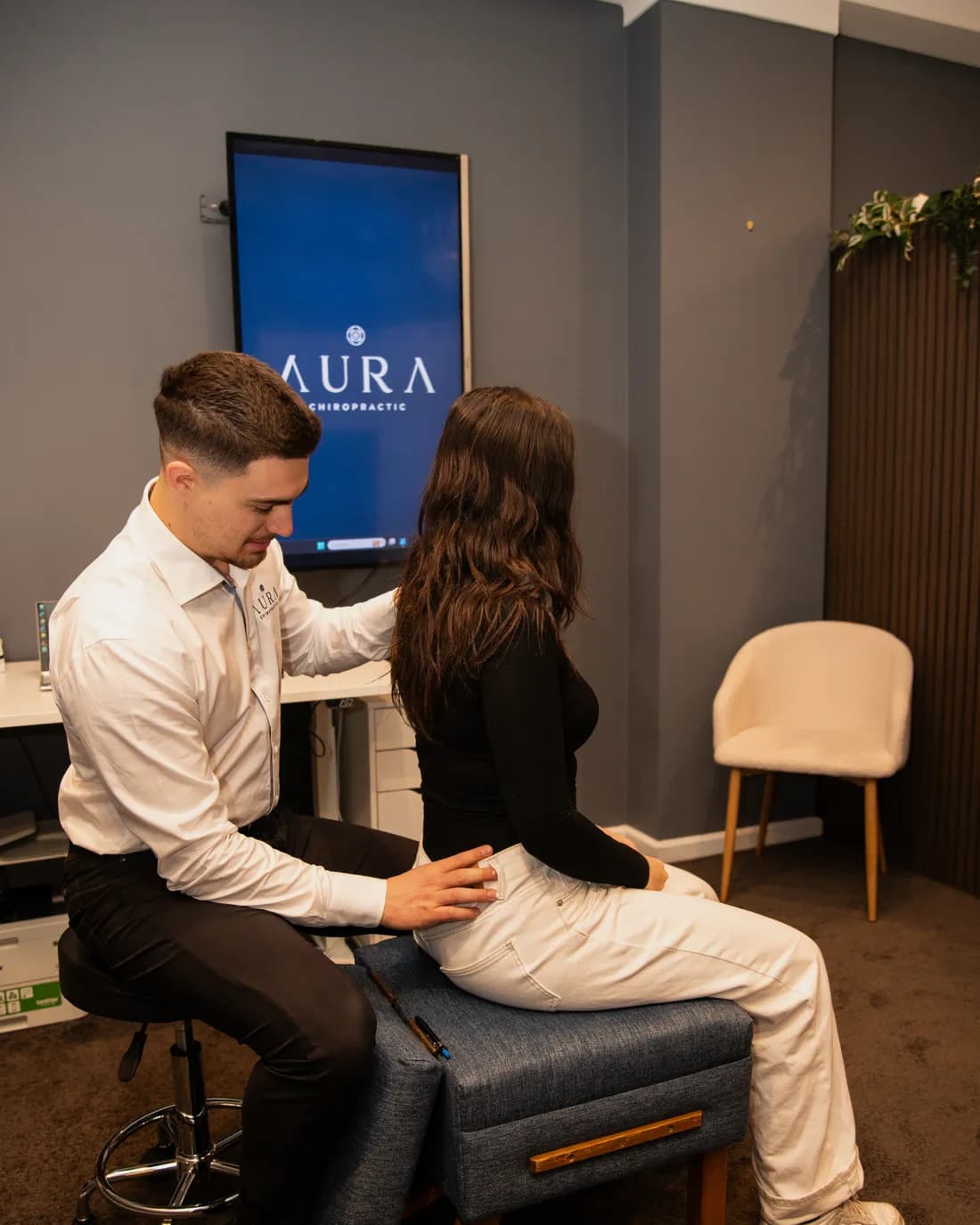
One visit, $99, ordinarily $189. A full history and examination so we understand what your body has been carrying and for how long.
Stage two: Neurological scans and Report of Findings
Dr Arthur Kaganovitch (Chiropractor) explains all the different scans and results and comes up with a bespoke, unique plan for your needs.
Stage three: Nervous system first chiropractic care
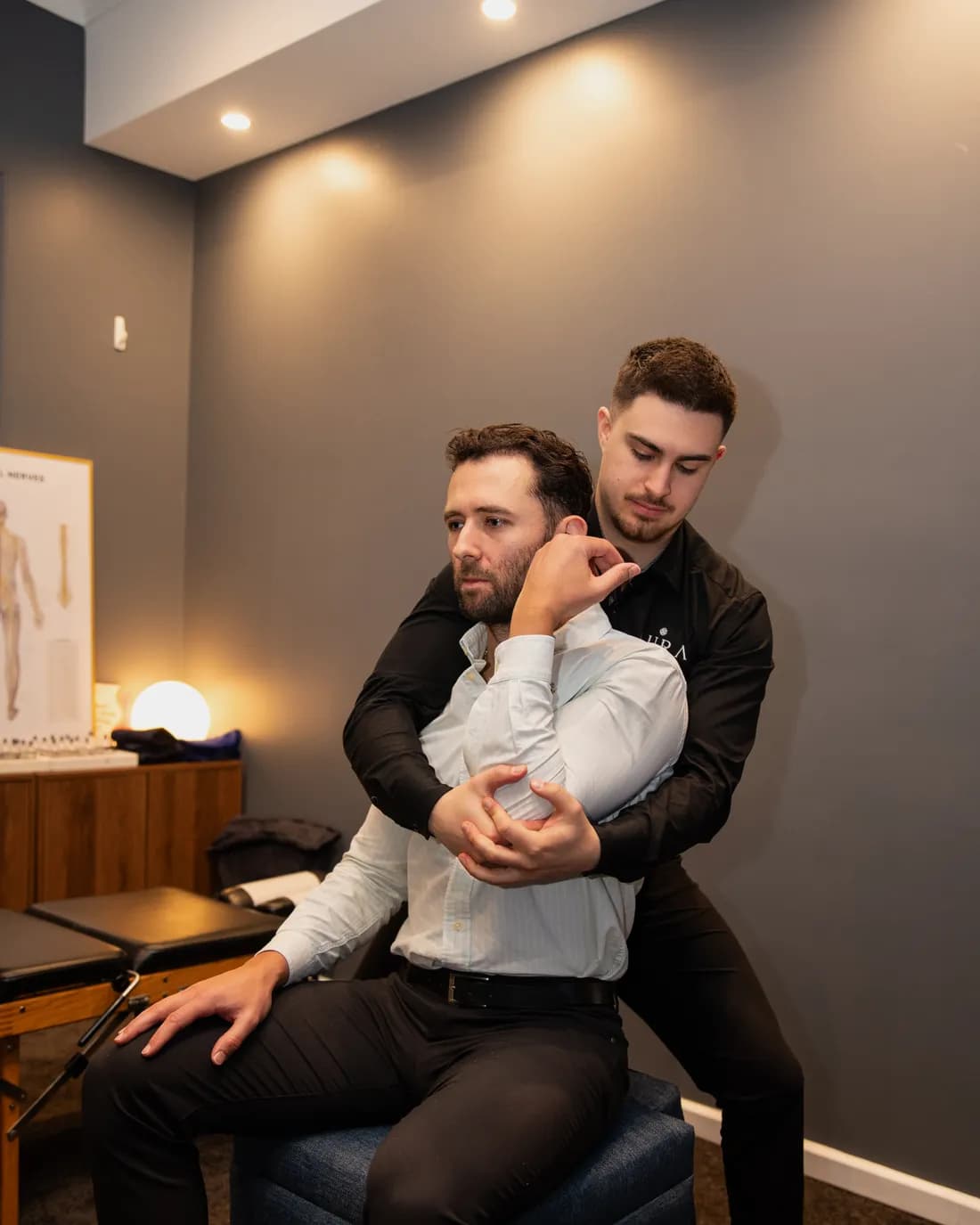
Specific, gentle adjustments directed at what the scans and examination found, re-measured against your own baseline so you can see what has shifted.
Your first visit
What the $99 assessment includes
$99, ordinarily $189. New patients only, one per person, no obligation to continue.
- Full case history
- Spinal examination
- Posture analysis
- Neurological examination
- Heart rate variability (HRV) measurement
- Thermographic (skin-temperature) scans
- Referral for spinal imaging (X-ray) if clinically indicated
Any imaging is charged by the imaging provider, not by Aura, and is not included in the $99.
Usually not on its own. Painless clicking is common and often needs nothing done about it. What is worth assessing is clicking that comes with pain, a jaw that locks or catches, a bite that has changed, or a noticeable reduction in how far you can open.
Care is directed at what the examination finds, which frequently means the upper neck rather than the jaw joint alone, since that is where the mechanical driver often sits. Where the jaw joint itself needs attention, that is done gently and specifically, and it is explained before anything happens.
A night guard protects your teeth from grinding, which is genuinely worth having, and it does not change why you are grinding. If the clenching is being driven by a nervous system that has not settled, that is the part an assessment here looks at.
Often yes, and the two are not in competition. Anything to do with the teeth themselves, the bite, or a splint belongs with your dentist. We look at the joint mechanics, the neck underneath it and the tension driving the clenching, and we refer when what we find is dental.
The first visit is $99, ordinarily $189. It is for new patients only, one per person, as a one-off payment, with no obligation to continue. Any imaging is charged by the imaging provider and is not included in the $99.
No. Chiropractic is a primary contact profession in Australia, so you can book directly, with no referral needed.
Observations attributed to Dr Arthur Kaganovitch (Chiropractor) reflect his clinical experience at Aura and are not claims of guaranteed outcomes. This page is general information, not a diagnosis or individual advice.
Related
Keep reading
The professional
Headaches and migraines
Neck pain
Posture
Cortisol and allostatic load: the wear of being switched on
From the journal
Cortisol is not the villain. The problem is a stress response that never fully stands down. What allostatic load means in plain words, how it builds, and how it shows up in the body.
Fight, flight and freeze: the three responses, and what freeze looks like
From the journal
Most people know fight and flight. Fewer recognise freeze, which is often what a burnt-out professional or an overwhelmed child is actually in. The three responses explained, and how we measure them.
Written by Dr Arthur Kaganovitch (Chiropractor). Last reviewed 8 September 2026.

Your body has been stuck in protection long enough
One visit to measure it. $99, ordinarily $189, no obligation to continue.