We assess
Vertigo and dizziness in Toorak
Dizziness is a symptom with many possible sources. The first job is not treatment. It is working out which one you have.
How it tends to show up
Does this sound like you?
01
A spinning sensation when you roll over in bed or tip your head back
02
Light headedness or unsteadiness that arrives with neck stiffness and headache
03
Feeling as though the floor is moving, or a sense of being on a boat
04
Dizziness that has been there since a car accident, a fall or a head knock
05
Unsteadiness that is worse in busy visual environments such as supermarkets
Dizziness is a symptom, not a diagnosis
People use one word for several quite different experiences. True vertigo is the illusion of movement, usually spinning, and it points strongly towards the balance organs of the inner ear or the parts of the brain that process them. Light headedness, the feeling of nearly fainting, is a different thing and often points towards blood pressure, medication or hydration. Unsteadiness on the feet is different again.
Sorting out which of these you actually have does most of the diagnostic work, and it is the first thing an assessment here does. A description of what you feel, when it starts, how long it lasts and what brings it on narrows the field faster than any single test.
How your body knows where it is
Balance is not one sense. Your brain builds it from three streams of information: your eyes, the balance organs of the inner ear, and position sensors in your joints and muscles, of which the upper neck holds one of the densest concentrations in the body. When all three agree, you feel steady and never think about it.
Dizziness tends to arrive when they disagree. That is why a neck injury can produce it, why it can follow a head knock, and why it can be worse in a supermarket aisle where the visual information is busy and unreliable. The system is receiving conflicting reports about where you are.
Where the neck comes into it
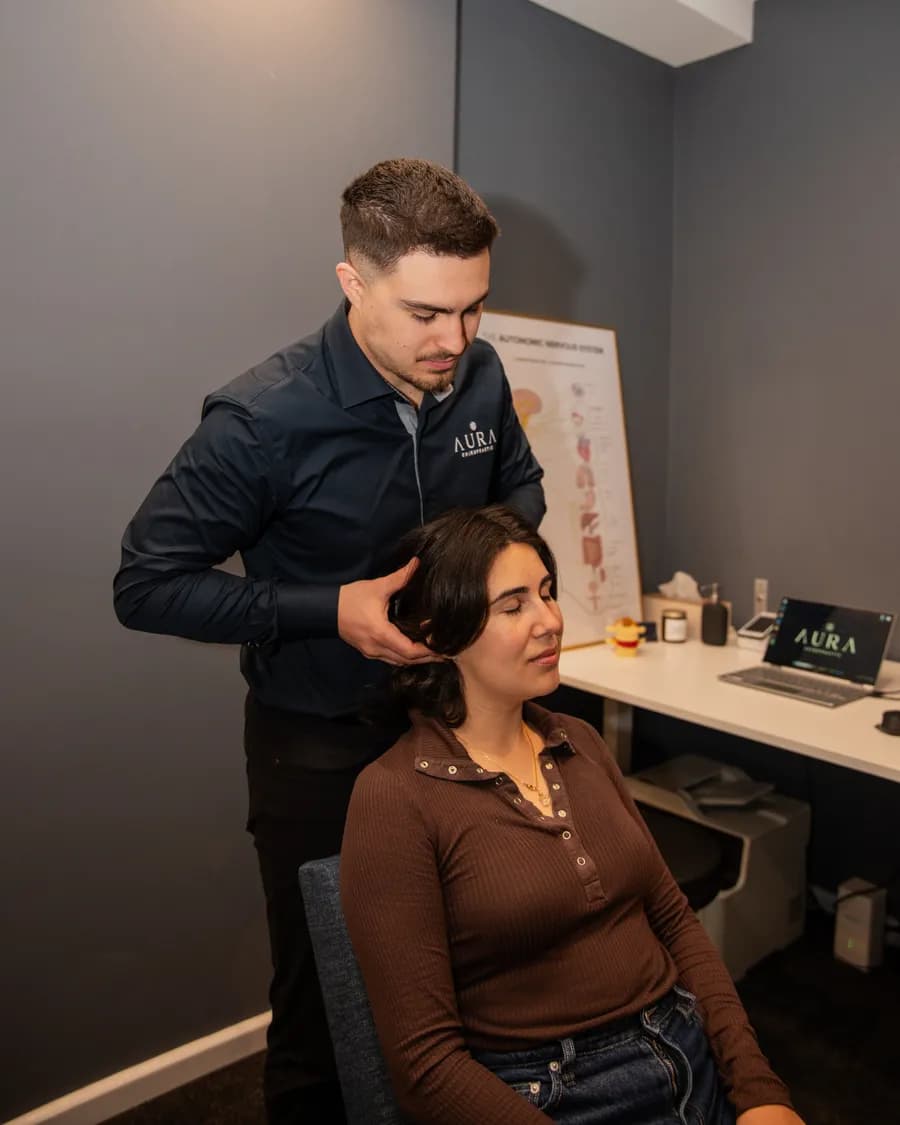
Dizziness that comes from the neck, sometimes called cervicogenic dizziness, has a recognisable signature. It travels with neck pain and stiffness, it is brought on by moving the neck rather than by head position alone, and it appears after a neck injury far more often than it arrives out of nowhere.
Where that picture fits, restoring movement to a guarded, restricted upper neck is the obvious thing to do and it is what we are good at. Where it does not fit, no amount of neck care will change it, and finding that out is worth knowing on its own.
When dizziness needs urgent medical care
Some dizziness is an emergency. Call 000 or go to an emergency department immediately for dizziness with sudden severe headache, double vision or loss of vision, slurred speech, weakness or numbness on one side of the body, difficulty walking or a loss of coordination, fainting, or chest pain and palpitations.
See your doctor before anything else for dizziness with new hearing loss or ringing in one ear, dizziness that started after a change in medication, or persistent dizziness with no clear pattern. Balance problems can involve the inner ear, the heart, blood pressure, medications and the brain, and none of those are ours to treat.
What we do
Your assessment starts with a detailed history, because the pattern of when and how the dizziness happens carries more information than any single test. From there it is a full spinal and neurological examination and a detailed Gonstead examination of the upper neck, which is where a neck related dizziness will show itself.
We measure heart rate variability and run thermographic scans as part of the same $99 assessment. Then we tell you plainly what we think is going on.
What we do
Measure first, then care for the cause
Most care treats the symptom. We measure the nervous system driving it, explain it plainly, then care for what we found.

Stage one: Book an initial consultation
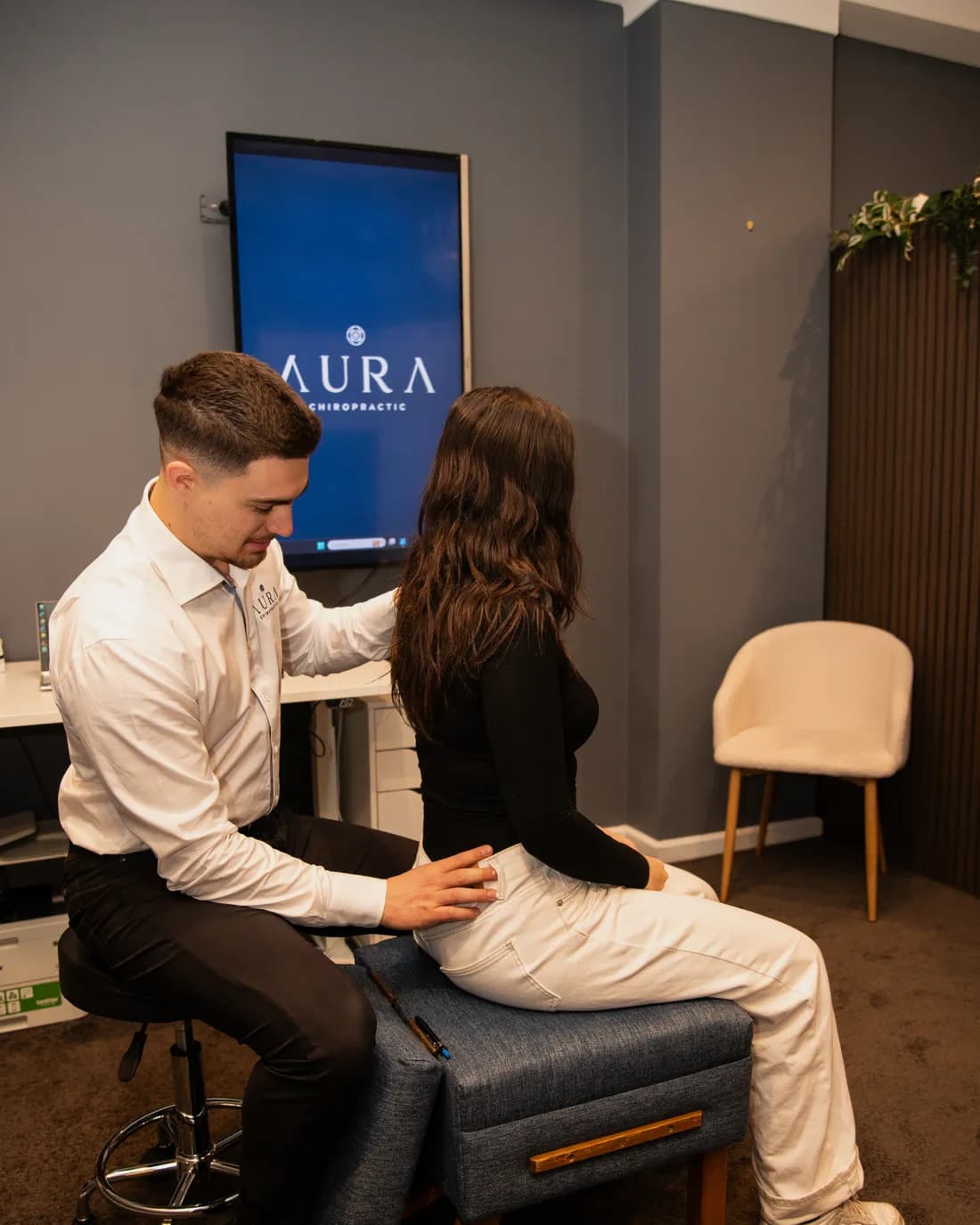
One visit, $99, ordinarily $189. A full history and examination so we understand what your body has been carrying and for how long.
Stage two: Neurological scans and Report of Findings
Dr Arthur Kaganovitch (Chiropractor) explains all the different scans and results and comes up with a bespoke, unique plan for your needs.
Stage three: Nervous system first chiropractic care
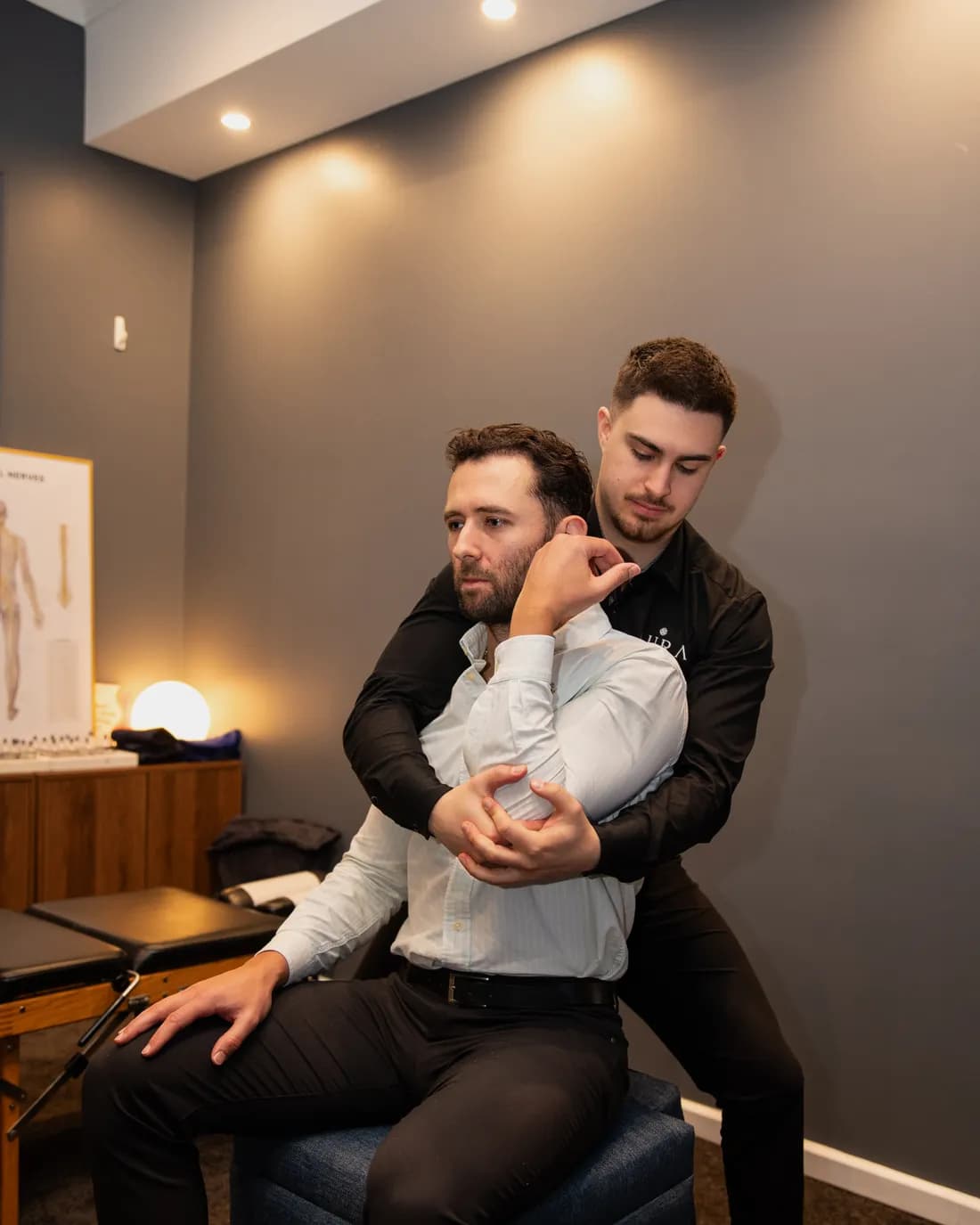
Specific, gentle adjustments directed at what the scans and examination found, re-measured against your own baseline so you can see what has shifted.
Your first visit
What the $99 assessment includes
$99, ordinarily $189. New patients only, one per person, no obligation to continue.
- Full case history
- Spinal examination
- Posture analysis
- Neurological examination
- Heart rate variability (HRV) measurement
- Thermographic (skin-temperature) scans
- Referral for spinal imaging (X-ray) if clinically indicated
Any imaging is charged by the imaging provider, not by Aura, and is not included in the $99.
Where the dizziness has a neck component, addressing a restricted and guarding upper neck is exactly the right thing to do. Where the cause sits in the inner ear, the heart or your blood pressure, chiropractic care is not the answer, and the assessment is what tells the two apart.
Benign paroxysmal positional vertigo is a common inner ear cause of brief, intense spinning brought on by particular head positions, classically rolling over in bed. It has its own specific repositioning treatments, and it has a distinctive pattern, so the useful thing an assessment does is recognise it rather than treat it as a neck problem.
It can be. Dizziness and unsteadiness are a recognised part of the picture after a neck injury, because the upper neck feeds the same balance system as the eyes and inner ear. That is one of the presentations where a careful neck assessment genuinely earns its place, once anything urgent has been ruled out.
The pattern gives it away more than any single test. Dizziness that arrived with a neck injury, that travels with stiffness, and that is provoked by neck movement rather than by head position alone, points towards the neck. That is what the examination is working out.
The first visit is $99, ordinarily $189. It is for new patients only, one per person, as a one-off payment, with no obligation to continue. Any imaging is charged by the imaging provider and is not included in the $99.
No. Chiropractic is a primary contact profession in Australia, so you can book directly, with no referral needed.
Observations attributed to Dr Arthur Kaganovitch (Chiropractor) reflect his clinical experience at Aura and are not claims of guaranteed outcomes. This page is general information, not a diagnosis or individual advice.
Related
Keep reading
The professional
Neck pain

Whiplash

Headaches and migraines
Fight, flight and freeze: the three responses, and what freeze looks like
From the journal
Most people know fight and flight. Fewer recognise freeze, which is often what a burnt-out professional or an overwhelmed child is actually in. The three responses explained, and how we measure them.
The Gonstead method, explained: analysis before adjustment
From the journal
Why we analyse before we adjust. The five steps of the Gonstead system, what the instrument and the X-ray are for, and why specificity is the whole point.
Written by Dr Arthur Kaganovitch (Chiropractor). Last reviewed 8 September 2026.

Your body has been stuck in protection long enough
One visit to measure it. $99, ordinarily $189, no obligation to continue.