We treat
Arthritis and joint pain in Toorak
An arthritis diagnosis explains a joint. It does not explain why that joint hurts more this month than last. That part is usually about load.
How it tends to show up
Does this sound like you?
01
Joint stiffness in the morning that eases once you have been moving for a while
02
An ache in the neck, back, hip or knee that is worse after activity and better with rest
03
A joint a scan has described as showing wear, degeneration or arthritic change
04
Stiffness that has crept in over years rather than arriving on a particular day
05
Doing less because of the joint, and finding everything else has tightened up as a result
Common, and not the whole explanation
Osteoarthritis affects a large share of Australians, and the proportion climbs steadily with age.[1] If you have been told you have it, you are in very ordinary company, and that is worth knowing because the word tends to land as though a door has closed.
The more useful fact is that the amount of arthritic change visible on a scan lines up poorly with how much pain a person actually has. Plenty of people have significant change on imaging and little discomfort, and plenty have modest change and a great deal of it. So the scan explains what the joint looks like. It does not, on its own, explain your symptoms.
Why one month is worse than the last
This is the question that matters clinically, and it is the one the diagnosis cannot answer. A joint does not change shape in four weeks. If it hurt more in July than it did in June, the difference is in what has been asked of it: how it is being loaded, how much you have been moving, how well you have been sleeping, and how much your system has been carrying.
That is genuinely good news, because those are the parts that can be worked with. The arthritic change is fixed. The load through the joint, the movement available in the joints above and below it, and the state of the nervous system responding to all of it, are not.
The nervous system picture
Dr Arthur Kaganovitch (Chiropractor) sees a familiar spiral in people who arrive with an arthritis diagnosis. The joint is sore, so it is used less. Using it less allows the surrounding muscles to weaken and the neighbouring joints to stiffen, which puts more load through the sore joint when it is eventually asked to work. Meanwhile the nervous system, which has been receiving pain signals from that area for months or years, becomes more protective of it rather than less.
Care aims at the parts of that spiral that can move. Restoring movement where the spine and the neighbouring joints have lost it, so the arthritic joint is not doing everyone else's share. Settling a system that has been guarding an area for a long time. And doing it without promising that the joint itself will be made new, because it will not be.
Not all arthritis is the same
Osteoarthritis, the kind associated with joint wear and age, is different from inflammatory arthritis such as rheumatoid or psoriatic arthritis, which are conditions of the immune system and are managed medically. They can look similar from the outside and they are not interchangeable.
The patterns that point towards inflammatory disease are worth knowing: joints that are hot, red and swollen, morning stiffness lasting more than an hour, several small joints affected symmetrically on both sides, or joint pain alongside fever, weight loss or a rash. Those need a medical diagnosis before anything else, and we screen for them.
What we do
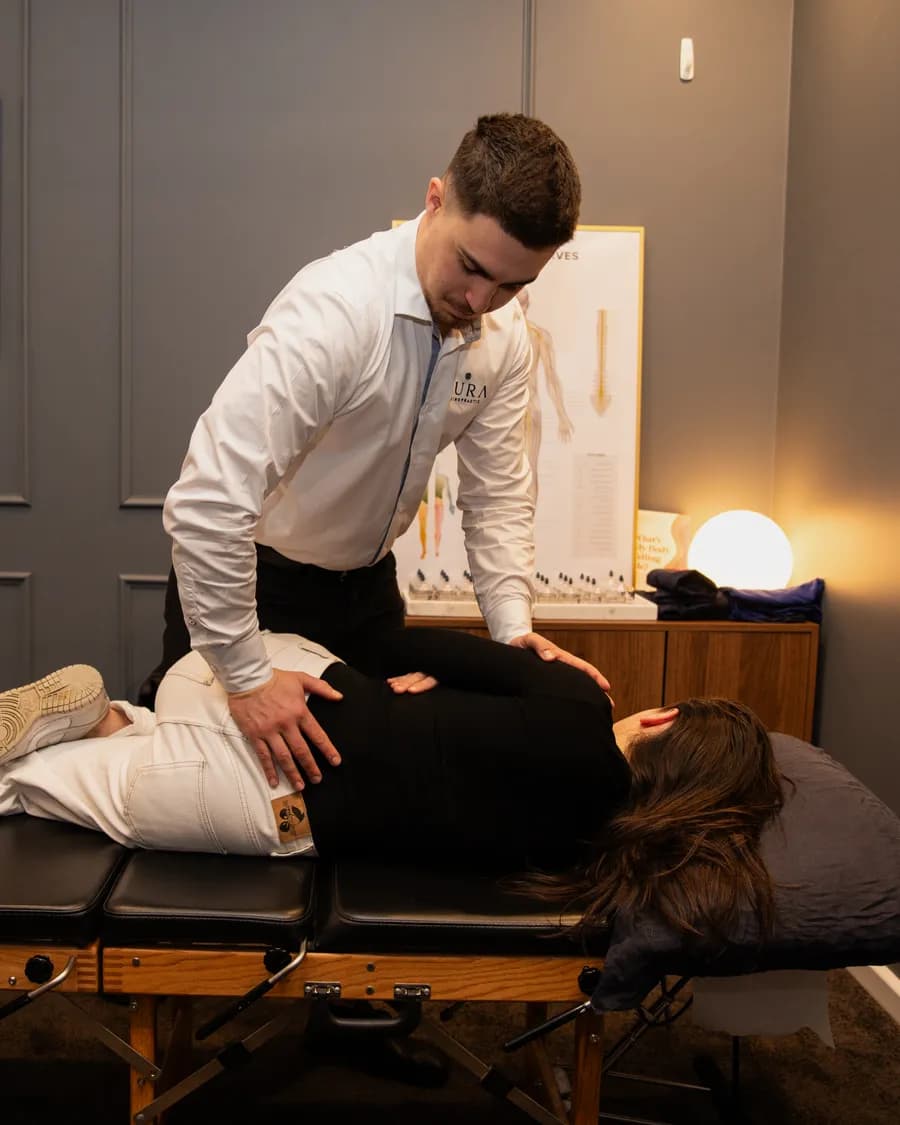
Your assessment includes a full case history, a spinal examination, posture analysis and a neurological examination, so we can see how the affected joint sits within the whole pattern rather than looking only at the spot that hurts.
We measure heart rate variability and run thermographic scans, both part of the $99 assessment, and we refer for spinal imaging if what we find clinically indicates it. Then Dr Arthur explains what we found in plain language, and what care can reasonably aim at in your case.
What we do
Measure first, then care for the cause
Most care treats the symptom. We measure the nervous system driving it, explain it plainly, then care for what we found.

Stage one: Book an initial consultation
One visit, $99, ordinarily $189. A full history and examination so we understand what your body has been carrying and for how long.
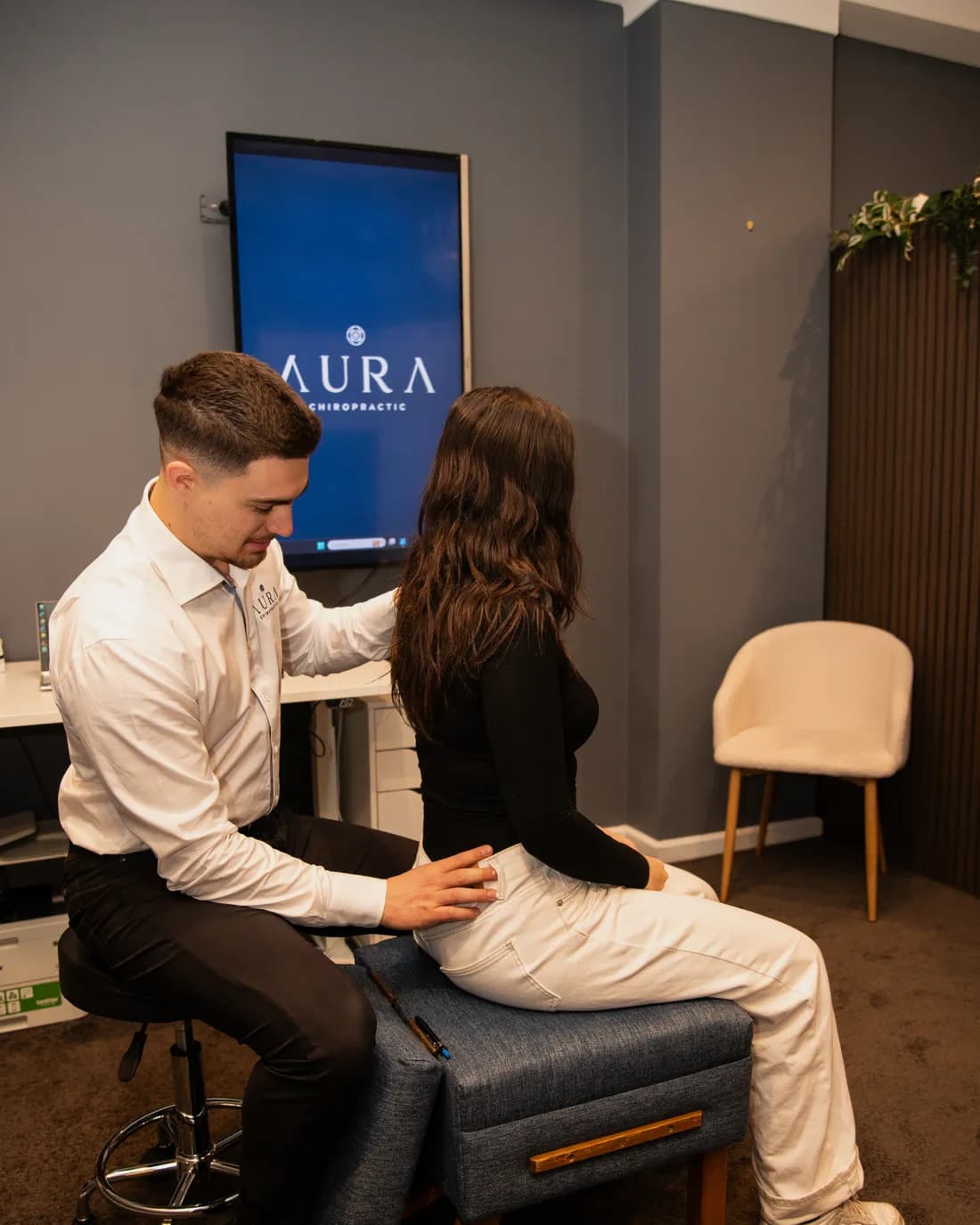
Stage two: Neurological scans and Report of Findings
Dr Arthur Kaganovitch (Chiropractor) explains all the different scans and results and comes up with a bespoke, unique plan for your needs.
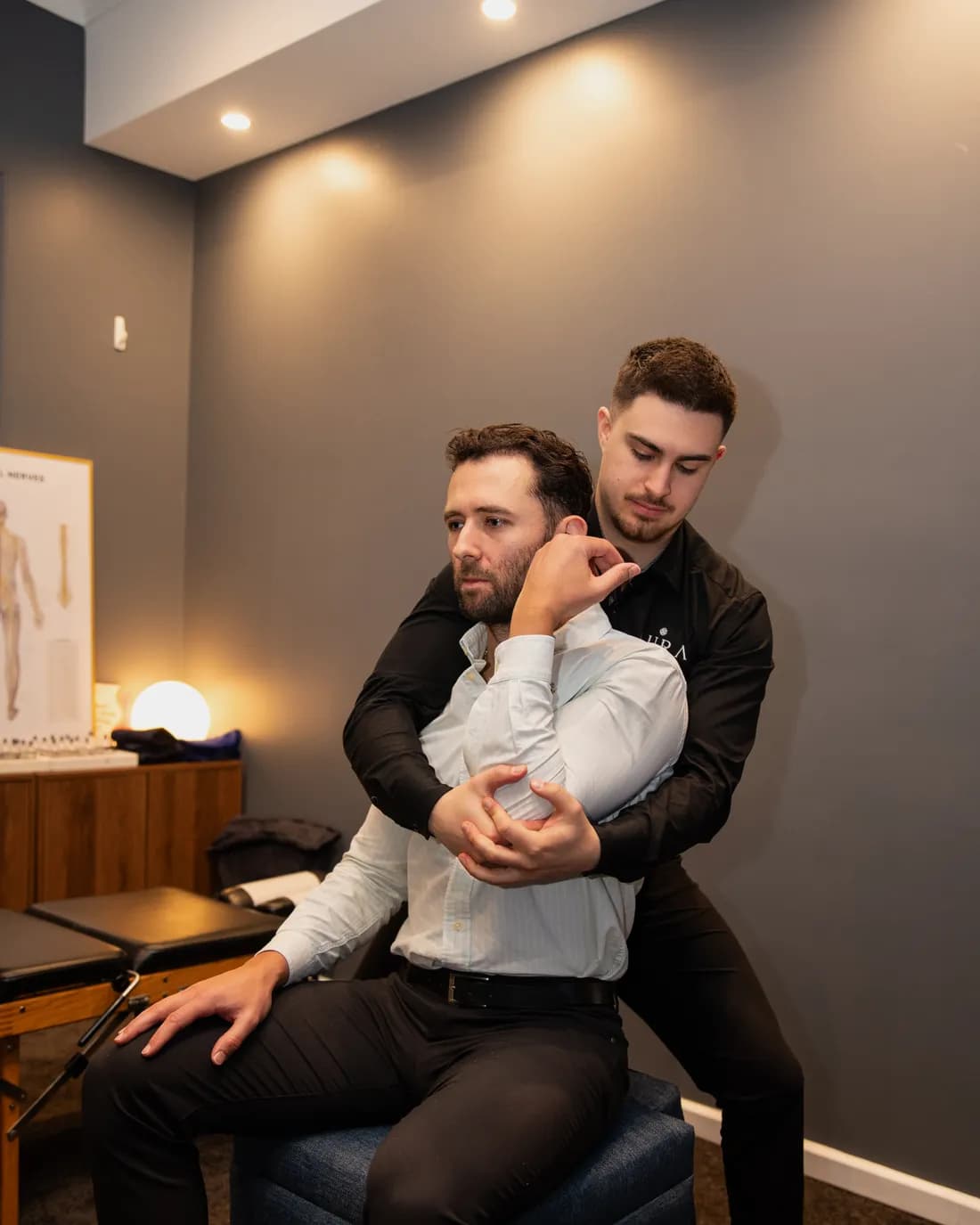
Stage three: Nervous system first chiropractic care
Specific, gentle adjustments directed at what the scans and examination found, re-measured against your own baseline so you can see what has shifted.
Your first visit
What the $99 assessment includes
$99, ordinarily $189. New patients only, one per person, no obligation to continue.
- Full case history
- Spinal examination
- Posture analysis
- Neurological examination
- Heart rate variability (HRV) measurement
- Thermographic (skin-temperature) scans
- Referral for spinal imaging (X-ray) if clinically indicated
Any imaging is charged by the imaging provider, not by Aura, and is not included in the $99.
No. Arthritic change in a joint is not undone by adjustment, and anyone who tells you otherwise is overselling. What care can work on is the movement and load around that joint and the nervous system's response to it, which is often where the difference in day to day comfort actually comes from.
Usually, with care adapted to what the examination finds. Technique and force are matched to the joints in question rather than applied as a standard routine, and where a joint is not appropriate to adjust we work around it. Inflammatory arthritis in an active flare is a different situation and is managed medically first.
For most osteoarthritis, movement is protective rather than harmful, and avoiding it tends to make things stiffer and weaker over time. What matters is the type and amount, which is worth working out for your specific joints rather than from a general rule.
Telling osteoarthritis from inflammatory arthritis usually takes blood tests. What the assessment does is recognise the patterns that point towards inflammatory disease, so it is identified rather than treated as though it were simple joint wear.
The first visit is $99, ordinarily $189. It is for new patients only, one per person, as a one-off payment, with no obligation to continue. Any imaging is charged by the imaging provider and is not included in the $99.
No. Chiropractic is a primary contact profession in Australia, so you can book directly, with no referral needed.
Sources
- 1. Australian Institute of Health and Welfare (AIHW). Osteoarthritis, 2024. View source
Population figures and guideline positions are drawn from the cited sources. Observations attributed to Dr Arthur Kaganovitch (Chiropractor) reflect his clinical experience at Aura and are not claims of guaranteed outcomes. This page is general information, not a diagnosis or individual advice.
Related
Keep reading

Parents
Hip pain
Lower back pain

Shoulder pain
Understanding lower back pain, and what actually helps it settle
From the journal
Lower back pain is the most disabling condition of working age, yet the vast majority of it is not what people fear. A researched, plainly written look at how common it really is, what tends to cause it, the part your nervous system plays, what the evidence says helps, and the myths worth retiring.
Desk posture: what actually matters, and what does not
From the journal
The perfect chair will not save your neck. What the research says about sitting, why variation and breaks matter more than a single correct position, and what a guarded posture is telling you.
Written by Dr Arthur Kaganovitch (Chiropractor). Last reviewed 8 September 2026.

Your body has been stuck in protection long enough
One visit to measure it. $99, ordinarily $189, no obligation to continue.