We treat
Hip pain assessment in Melbourne
Hip pain does not always come from the hip. Our work is to find whether it is the joint, the lower back or the pelvis, and settle the right one.
How it tends to show up
Does this sound like you?
01
An ache deep in the groin or side of the hip that is worse with walking or stairs
02
Pain on the outside of the hip that is tender to lie on at night
03
Stiffness getting up from sitting, especially after long stretches at a desk
04
Pain that seems to sit in the hip but traces back to the lower back or buttock
05
A dull ache after running, walking or standing for long periods
Where hip pain actually comes from
Hip pain is a location, not a diagnosis. The true source can be the hip joint itself, the bursa (a small fluid-filled cushion over the joint) or the gluteal tendons that attach the buttock muscles to the outer hip, or it can be referred, meaning it starts elsewhere and is felt at the hip. The lower back and the sacroiliac joint (where the base of the spine meets the pelvis) are the two most common sources of pain that people mistake for a hip problem.
Because several structures overlap in the same area, working out which one is actually driving your pain is the point of the assessment, not something a person can reliably tell from where it hurts alone.
Why long sitting loads the hip
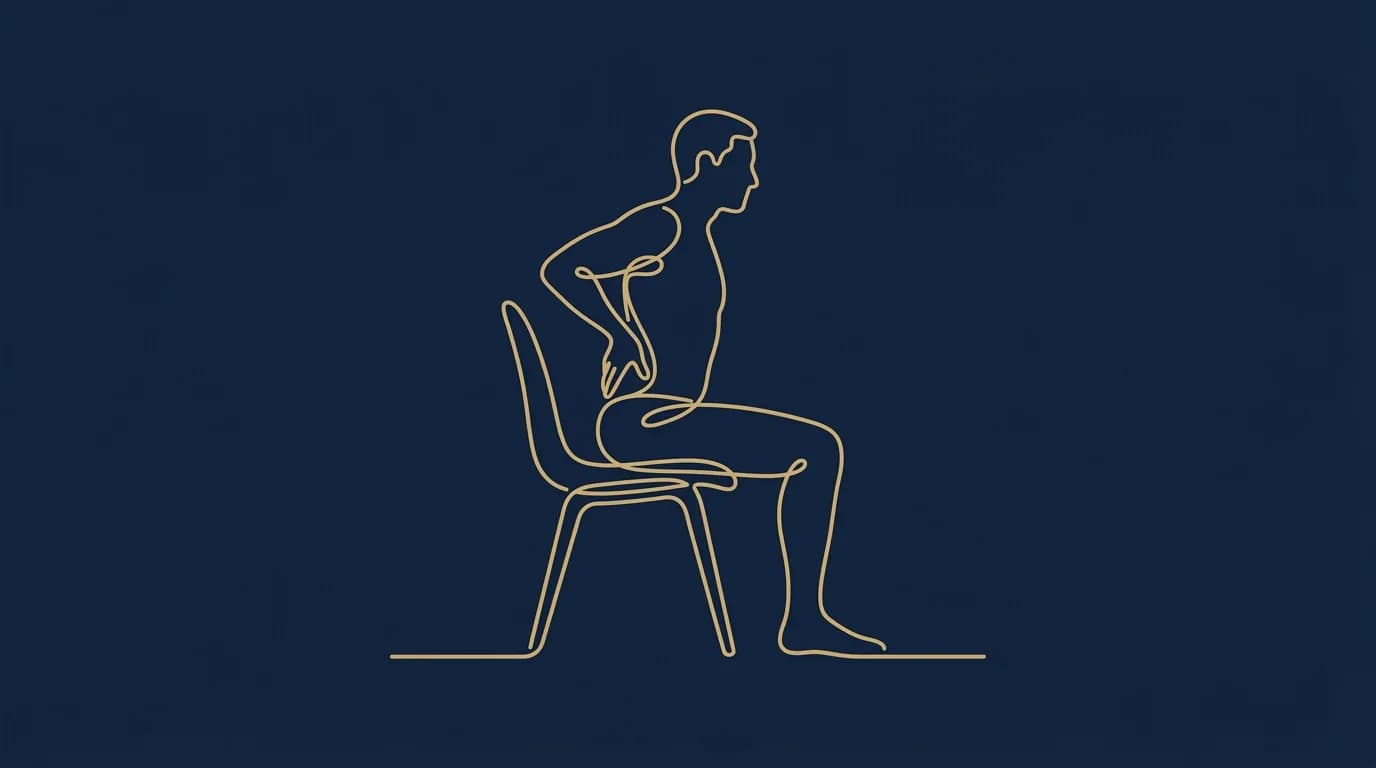
Sitting for long stretches keeps the hip in a flexed position, shortens the muscles at the front of the hip and puts sustained load through the gluteal tendons at the outer hip and the joints of the lower back and pelvis. Standing back up after hours at a desk, then asking the hip to suddenly bear full load and range of motion, is a common trigger for the ache many people notice by mid-afternoon.
This is a large and growing part of who we see: people spending most of the day seated for work, then wondering why the hip complains on the walk to the car or the school pickup.
The nervous system picture
Dr Arthur Kaganovitch (Chiropractor) sees hip pain follow the same pattern as pain elsewhere in the body: a joint or set of tendons under sustained load, with the surrounding area guarding and the nervous system holding tension around it. Treating only the sore spot without addressing the load pattern feeding it, whether that is a stiff lower back, a rotated pelvis or hours of sitting, tends not to hold.
Care is directed at what the examination and scans actually find, whether that means the hip joint, the pelvis, the lower back, or a combination, rather than assuming the hip is always the source because that is where it hurts.
When hip pain needs medical assessment
Some hip pain needs medical attention rather than chiropractic care. See a doctor promptly for a fall in an older adult, an inability to bear weight on the leg, hip pain with fever, or sudden severe pain after an injury. These can signal a fracture or infection that needs urgent medical management.
What we do
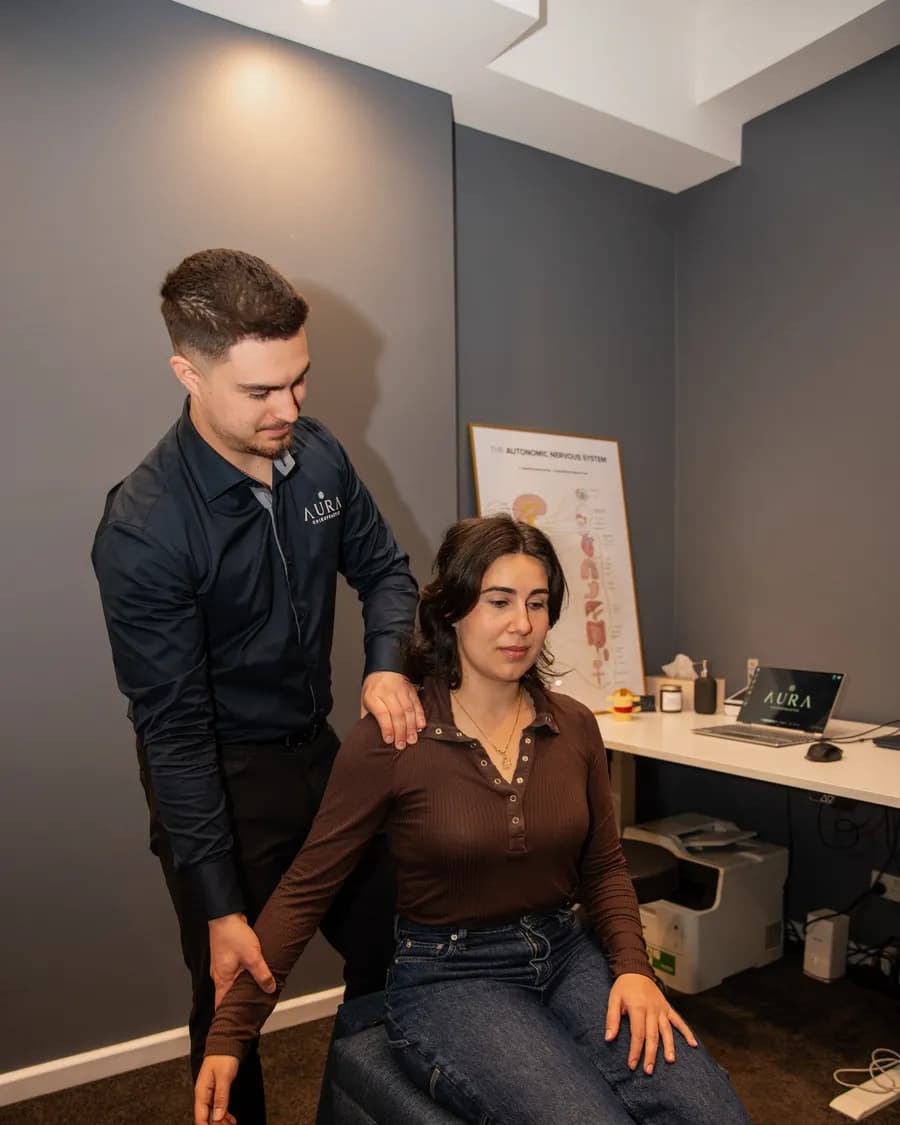
Your assessment includes a full case history, a spinal and neurological examination, and specific testing to help tell whether the hip, the lower back or the pelvis is driving your pain. Dr Arthur uses Gonstead analysis to examine the pelvis and lumbar spine in detail, since a rotated or restricted pelvis often changes how load moves through the hip.
We measure your nervous system with heart rate variability and thermographic scans, then explain plainly what we found before any care begins. If a gluteal tendon or bursa issue needs care beyond what we offer, we will tell you directly.
What we do
Measure first, then care for the cause
Most care treats the symptom. We measure the nervous system driving it, explain it plainly, then care for what we found.

Stage one: Book an initial consultation
One visit, $99, ordinarily $189. A full history and examination so we understand what your body has been carrying and for how long.
Stage two: Neurological scans and Report of Findings
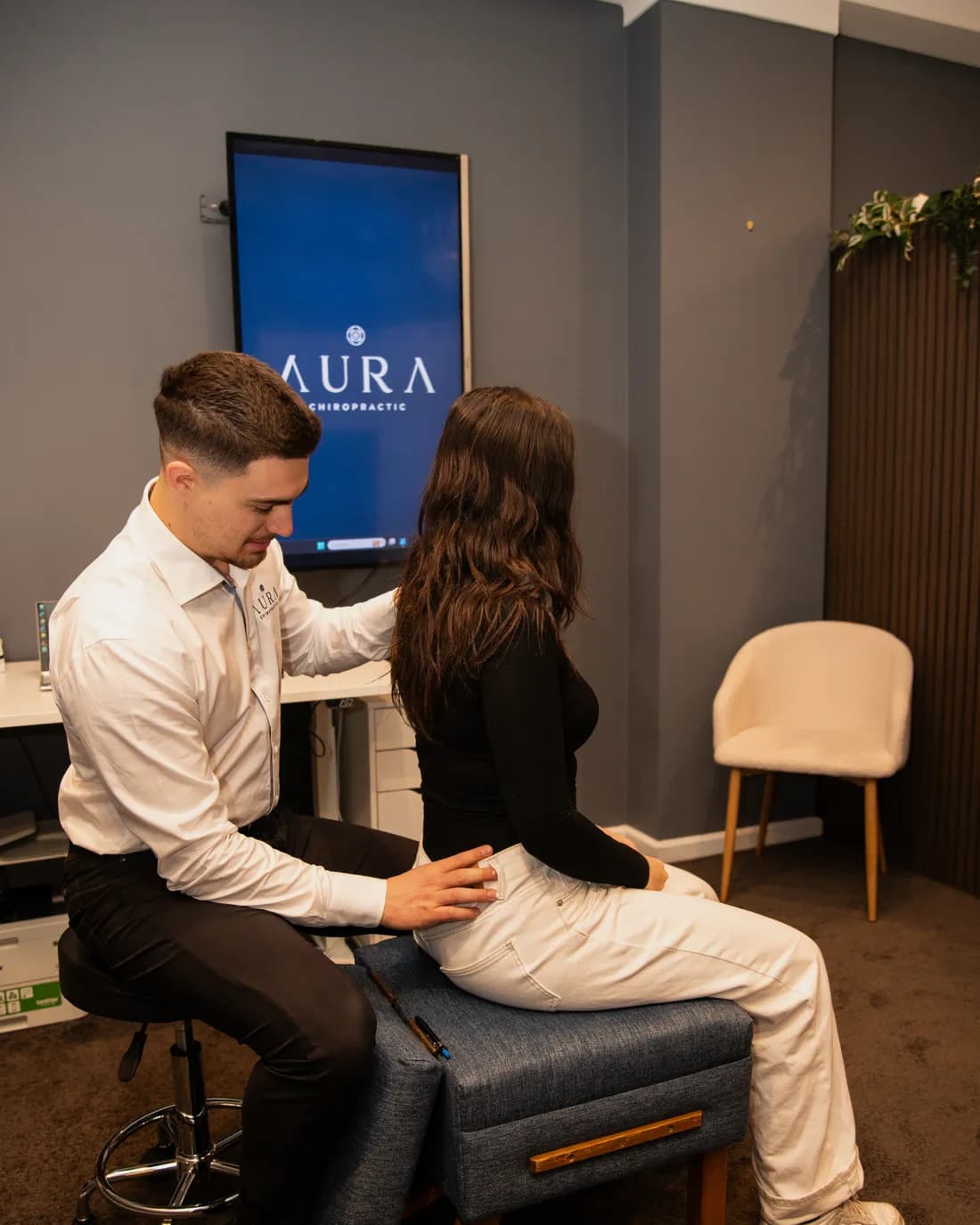
Dr Arthur Kaganovitch (Chiropractor) explains all the different scans and results and comes up with a bespoke, unique plan for your needs.
Stage three: Nervous system first chiropractic care
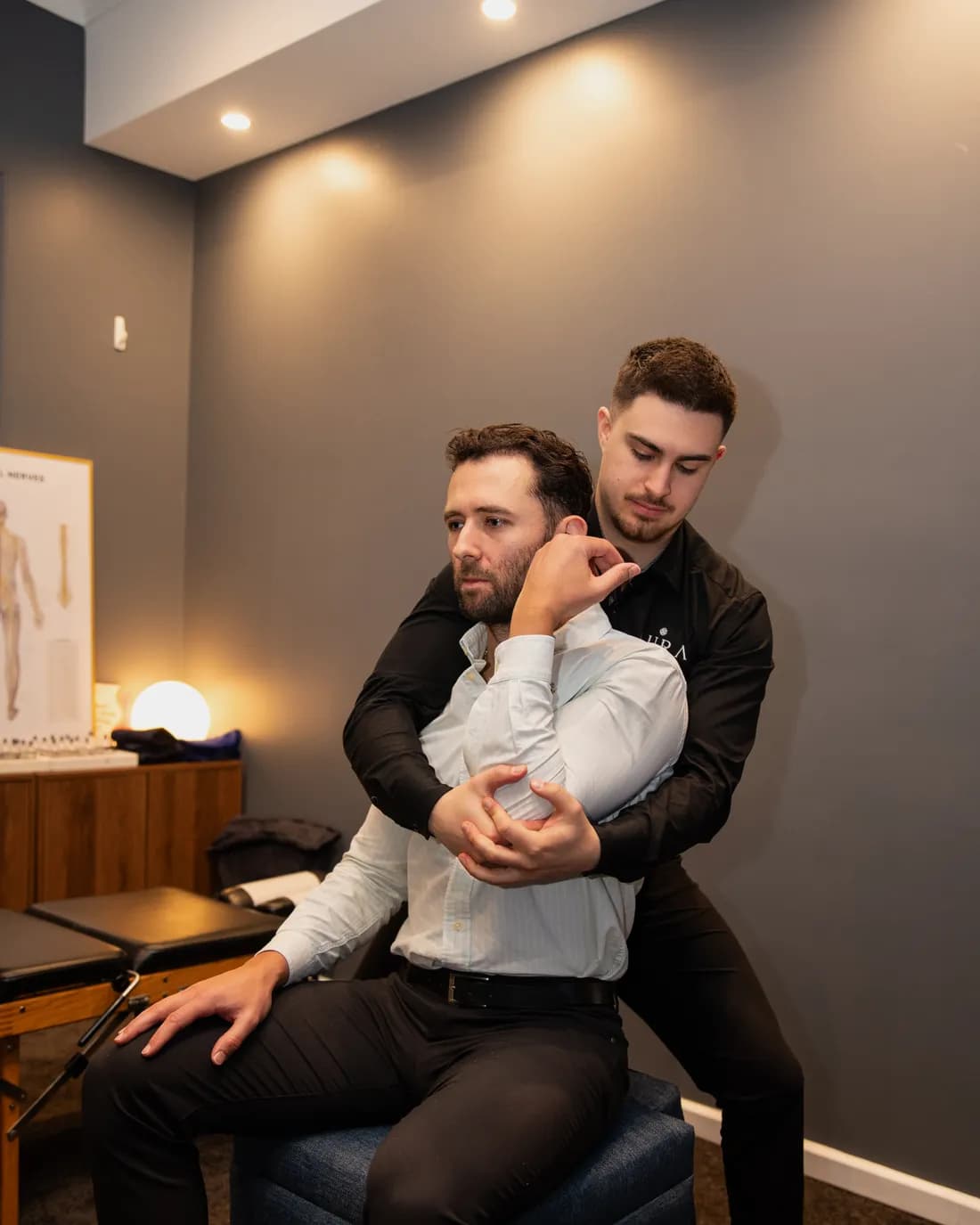
Specific, gentle adjustments directed at what the scans and examination found, re-measured against your own baseline so you can see what has shifted.
Your first visit
What the $99 assessment includes
$99, ordinarily $189. New patients only, one per person, no obligation to continue.
- Full case history
- Spinal examination
- Posture analysis
- Neurological examination
- Heart rate variability (HRV) measurement
- Thermographic (skin-temperature) scans
- Referral for spinal imaging (X-ray) if clinically indicated
Any imaging is charged by the imaging provider, not by Aura, and is not included in the $99.
Often the two are hard to tell apart without an examination, since the lower back and sacroiliac joint frequently refer pain into the hip and buttock. Your assessment includes specific testing of the hip, pelvis and lower back so we can work out which one is actually driving your pain.
Not necessarily, but it depends on what the examination finds and how your pain behaves. We will talk through what to modify, such as volume, surfaces or a rest period, based on your specific presentation rather than a blanket rule.
We assess whether the hip joint, the lower back or the pelvis is driving your pain, and gluteal tendinopathy and bursitis can be part of that picture. Some cases settle well with chiropractic care and load management; others need care beyond what we offer, and we will tell you plainly if that is the case.
Hip pain can come from arthritic change, but it can equally come from the joint, the tendons, the bursa or a referred pattern from the back or pelvis, so a label is not something we assume from symptoms alone. A full examination, and imaging if clinically indicated, gives a clearer answer than guessing.
The first visit is $99, ordinarily $189. It is for new patients only, one per person, as a one-off payment, with no obligation to continue. Any imaging is charged by the imaging provider and is not included in the $99.
No. Chiropractic is a primary contact profession in Australia, so you can book directly, with no referral needed.
Sources
- 1. Australian Institute of Health and Welfare (AIHW). Osteoarthritis, 2024. View source
- 2. Journal of Orthopaedic & Sports Physical Therapy (JOSPT). Gluteal tendinopathy: integrating pathomechanics and clinical features in its management, 2015. View source
Population figures and guideline positions are drawn from the cited sources. Observations attributed to Dr Arthur Kaganovitch (Chiropractor) reflect his clinical experience at Aura and are not claims of guaranteed outcomes. This page is general information, not a diagnosis or individual advice.
Related
Keep reading
Lower back pain
Sciatica
Posture
Understanding lower back pain, and what actually helps it settle
From the journal
Lower back pain is the most disabling condition of working age, yet the vast majority of it is not what people fear. A researched, plainly written look at how common it really is, what tends to cause it, the part your nervous system plays, what the evidence says helps, and the myths worth retiring.
Desk posture: what actually matters, and what does not
From the journal
The perfect chair will not save your neck. What the research says about sitting, why variation and breaks matter more than a single correct position, and what a guarded posture is telling you.
Written by Dr Arthur Kaganovitch (Chiropractor). Last reviewed 8 September 2026.

Your body has been stuck in protection long enough
One visit to measure it. $99, ordinarily $189, no obligation to continue.